montreal 1

Ice Box Challenge Montréal Returns for 2026-2027 School Year

By Jay Fox

In the summer of 2025, three sheds appeared on the promenade of Montréal’s Old Port. When passersby peered into the windows, they saw the glint of a large block of ice sitting within each of the sheds. Two of the blocks were notably larger than the third, but it wasn’t clear why. Structurally, the sheds seemed to be the same. Each one took up an 8’x8’ footprint, had a shed roof, one window, a door wide enough to admit the original block of ice, and no electricity. All three spent the majority of the day in full sun.

According to nearby signage, the only difference was how the walls and roof of the structures had been constructed. The two sheds with the larger blocks of ice had been built according to Passive House principles, while the one with the smaller block of ice was built to code. More than one person wandering by must have asked themselves incredulously, “Can a building enclosure by itself really make that much of a difference?”

The simple answer is “yes.” Understanding why gets a little complicated.

The 2026-2027 Montréal Ice Box Challenge will build on the success of previous Challenges, including the city’s own in 2025. Photo courtesy of Bâtiment Passif Québec. The top photo shows the two student teams from the 2025 Challenge in Montréal. Top photo courtesy ÉTS

Passive Principles

Passive House is neither a brand nor a style of housing. It’s a methodology for constructing efficient, comfortable, and healthy buildings that was first developed by Dr. Wolfgang Feist in Germany approximately 35 years ago. Dr. Feist, a professor of building physics, identified five principles that have become the foundation of Passive House construction: continuous insulation, thermal bridge-free design, exceptional airtightness, high-performance windows and doors, and mechanical ventilation with heat recovery. When they act in concert, the principles enhance and support one another to create buildings that retain their temperature without the need to constantly run heating or cooling systems. In fact, Passive House buildings can reduce heating energy by as much as 90%. An Ice Box Challenge, like the one described above, demonstrates that Passive House buildings can also act like insulated coolers in the summer to keep those inside comfortable.

In terms of occupant experience, Passive House buildings are designed for uniformity: there are no drafts and no random hot or cold spots. Additionally, the combination of airtightness and mechanical ventilation means that stale air is regularly exhausted and that all fresh air that is brought in passes through a filter to remove dust, pollen, allergens, and even particulate matter from wildfire smoke. The result is an indoor environment that is comfortable, clean, and quiet.

Don't Go It Alone. Join Our Community.

The Reimagine Buildings Collective brings together building professionals stepping up to tackle climate change.

European Origins

Building science is a notoriously complex web of chemistry, physics, and engineering that can be difficult to explain. The units of measurement sound obscure and overly technical and even the things that they are measuring are rarely encountered unless one has worked in the architecture, engineering, and construction industry. The average person may have an intuitive understanding of pressure and “pounds per square inch” because they’ve filled up the tire on their car or bicycle. They probably won’t have the same relationship with air leakage, especially when the unit of measurement is “air changes per hour at fifty pascals.”

Turning away from the jargon and presenting the average person with something more familiar is what makes the Ice Box Challenge such a breath of fresh air. The performance of the buildings is measured in something tangible: solid ice. Moreover, the format eliminates variability. The boxes are located in a shared public space, their dimensions are identical, and the ice blocks all begin at the same mass. Because there’s no active cooling, the building enclosures really are doing all the work to keep the ice from melting.

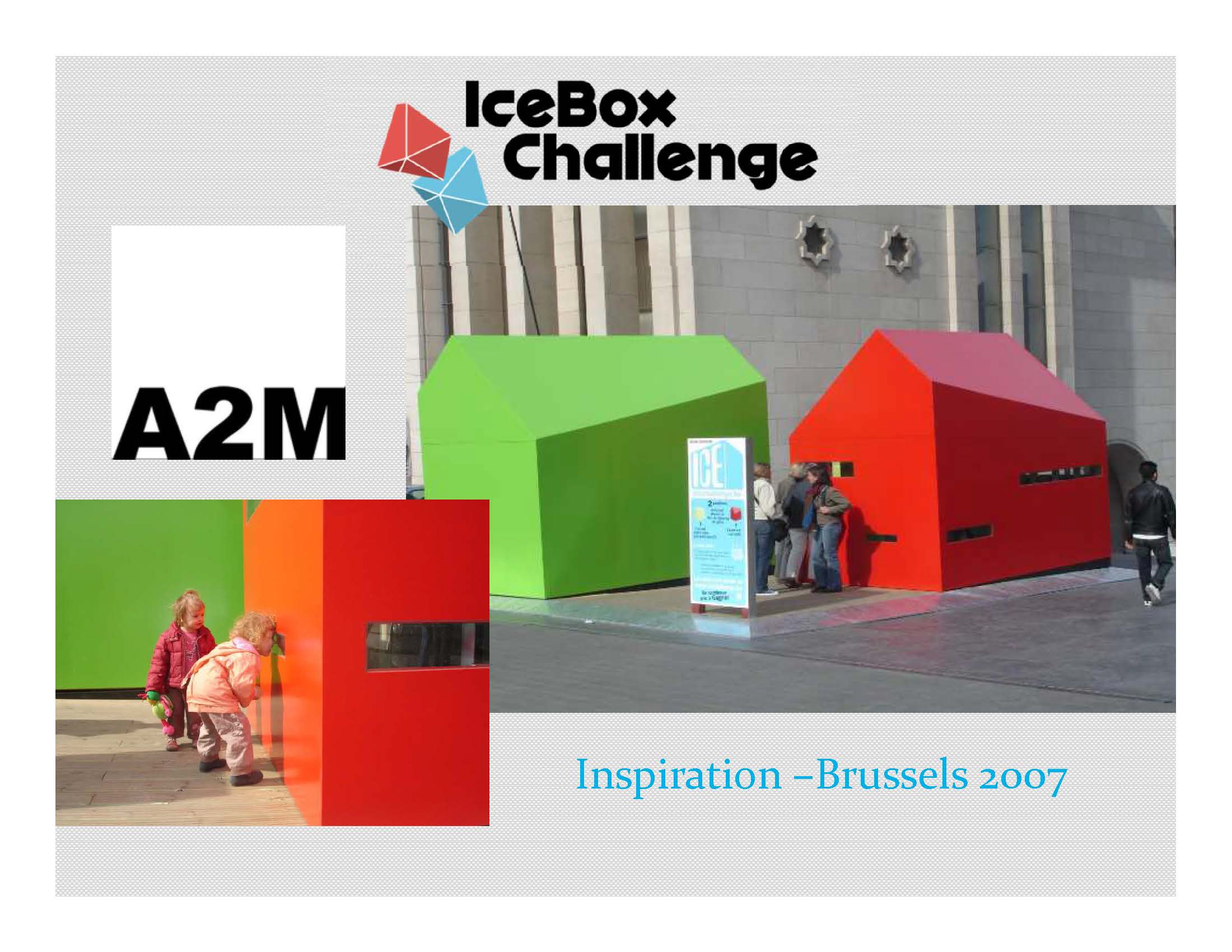
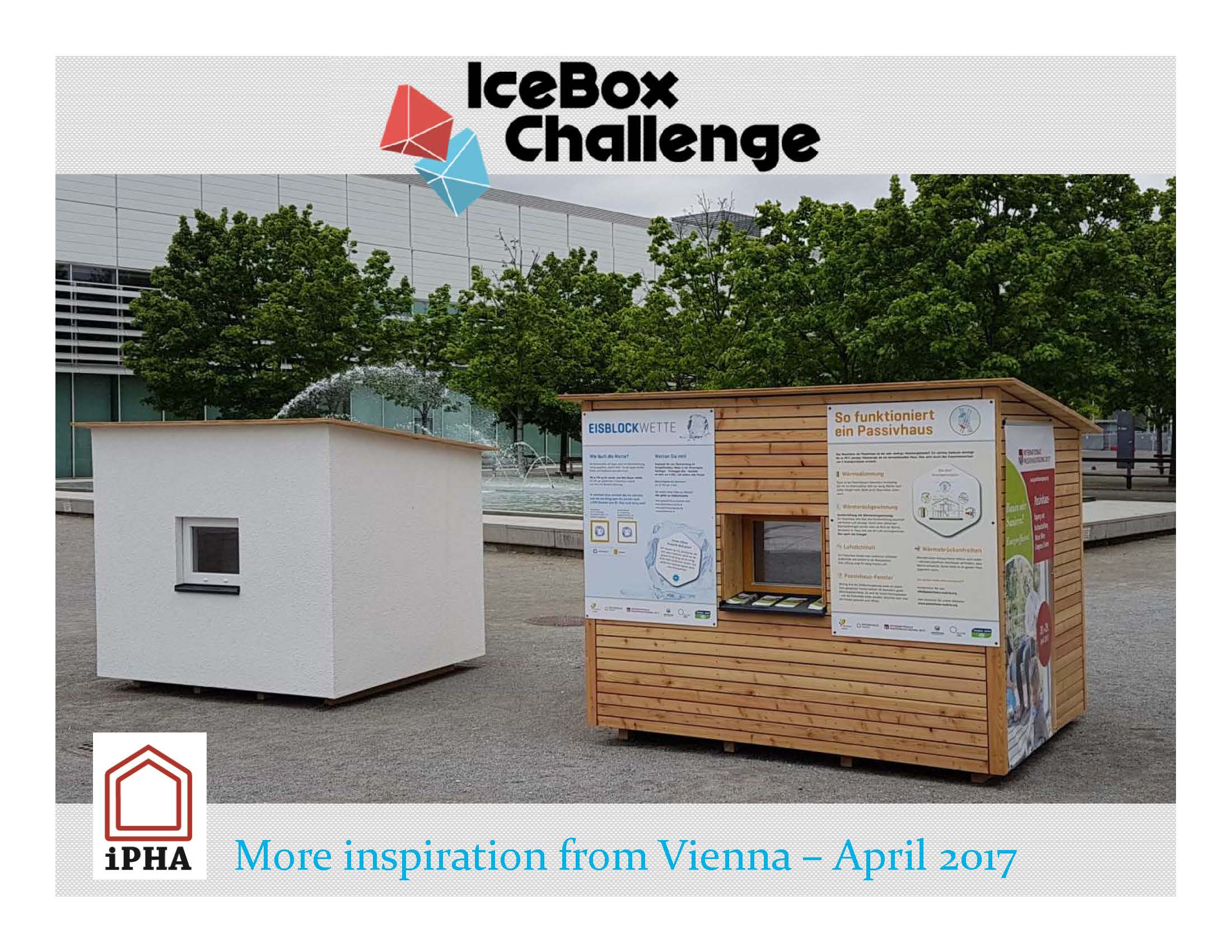
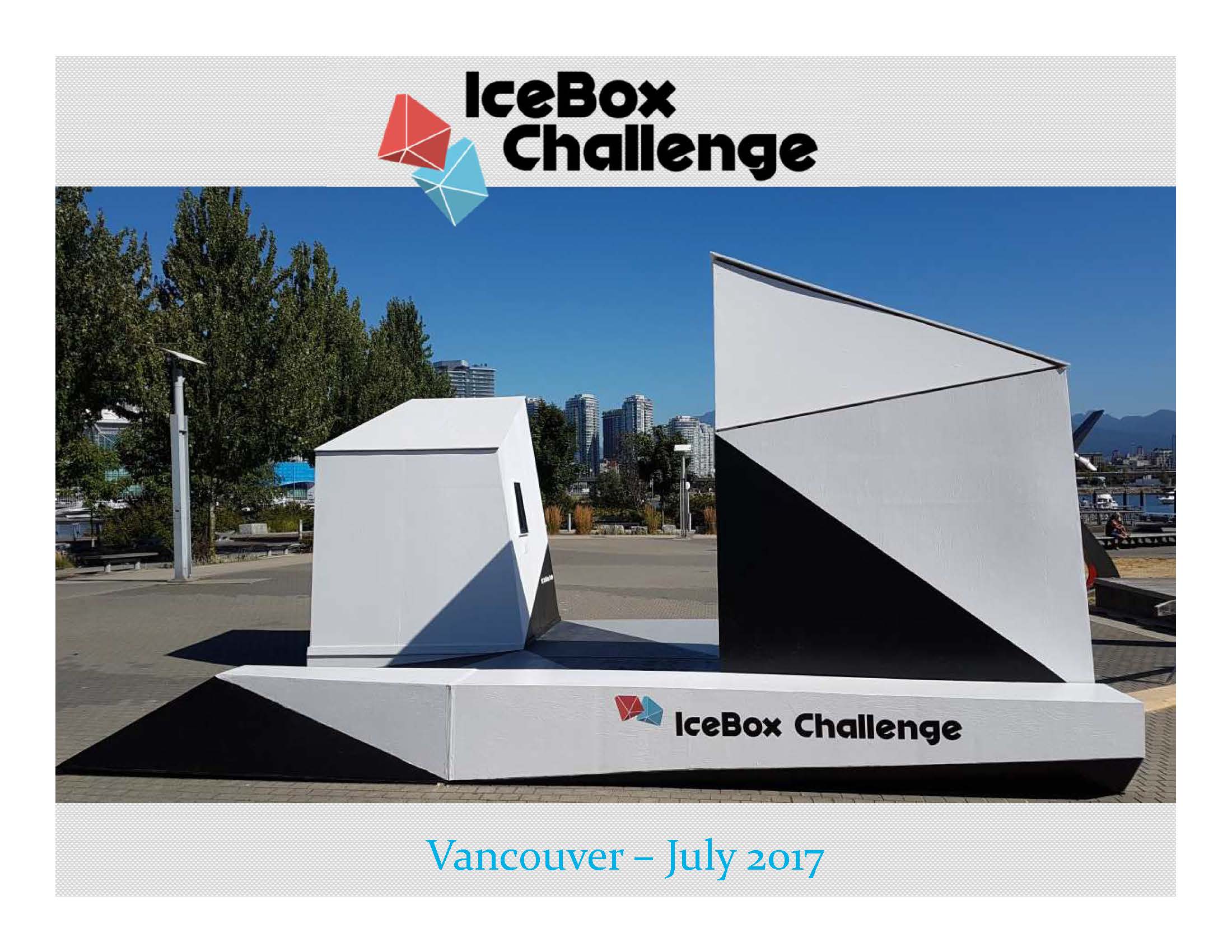
Montréal is not the first city to host the Ice Box Challenge. Its first appearance in North America dates back to Vancouver in 2017, though the first Challenge was staged in Brussels in 2007, according to Shaun St-Amour, a Passive House guru now with ETRO Construction in Burnaby. St-Amour’s first exposure to the Challenge (or Die Eisblock-Wette [The Ice Block Bet]) was in Vienna during the 2017 International Passive House Conference. He traveled there as part of group from Passive House Canada along with Adam James, who established the Vancouver studio of the architecture firm Ryder and serves as its principal.

The Vienna Challenge was staged in front of the venue where the conference was held and organized by GLOBAL 2000, Passivhaus Austria, the Passive House Institute (PHI), and Österreichischer Rundfunk (Austria’s national public broadcaster) via the Mutter Erde initiative. The demonstration involved two small boxes—one built using standard construction specs for Austria, one built to the Passive House standard—that were each filled with a 250-kilogram block of ice and left out in the sun for 1,000 hours. At the end of the event, the ice in the box built to the Austrian code had completely melted. The Passive House box still contained 20 kilograms.

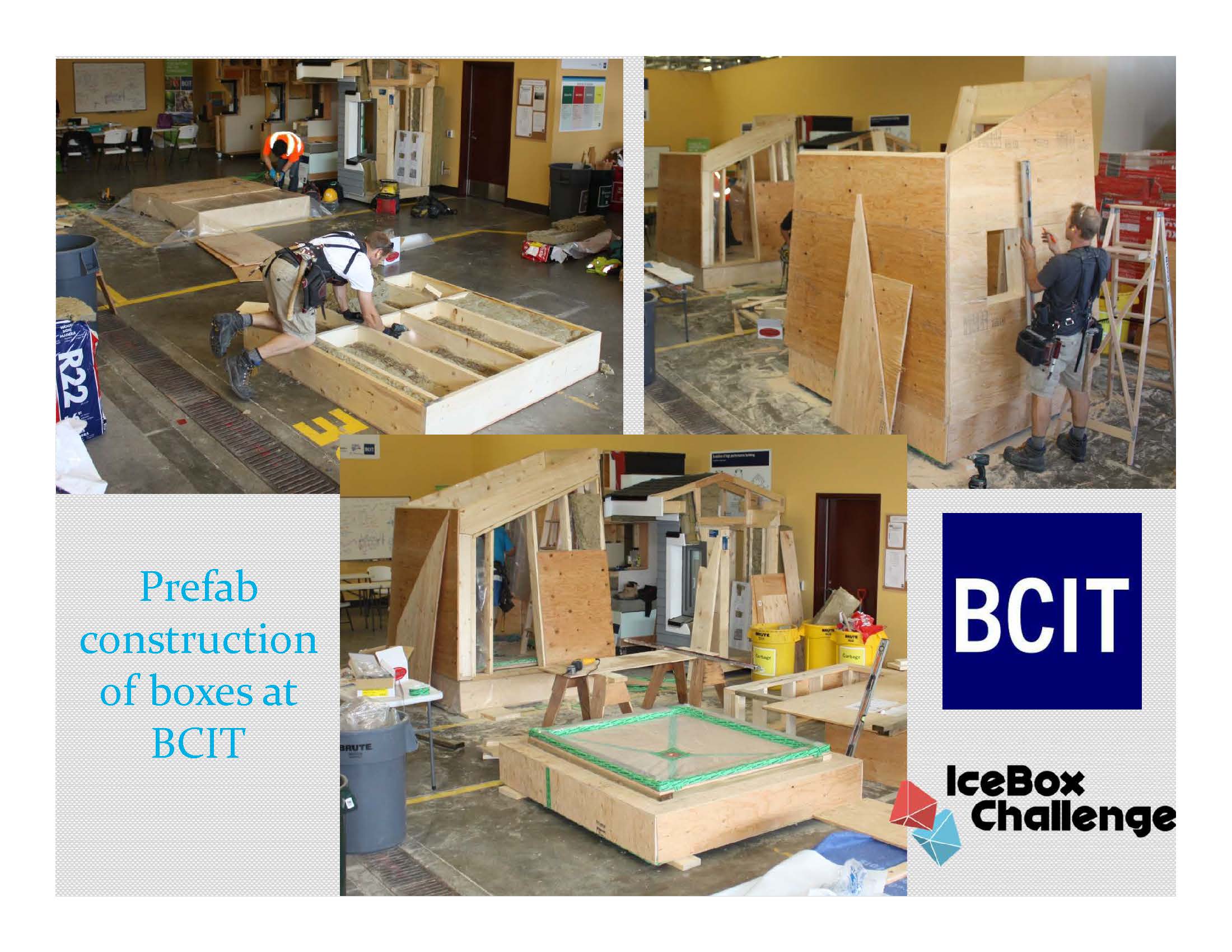
St-Amour and James appreciated the demonstration so much that they encouraged the City of Vancouver and Passive House Canada to attempt a challenge in Vancouver. Thus, with everyone's efforts and with local manufacturer's sponsorship, an event was put forth. Stark Architecture won the design challenge. One box was built to the BC Building Code, while the other was built to Passive House standards. James managed the design efforts with Stark while St-Amour's team built the boxes at BCIT's High-Performance Building Lab. Each one was designed to have a single window, a shed roof, and sensors to measure temperature and the mass of the ice.

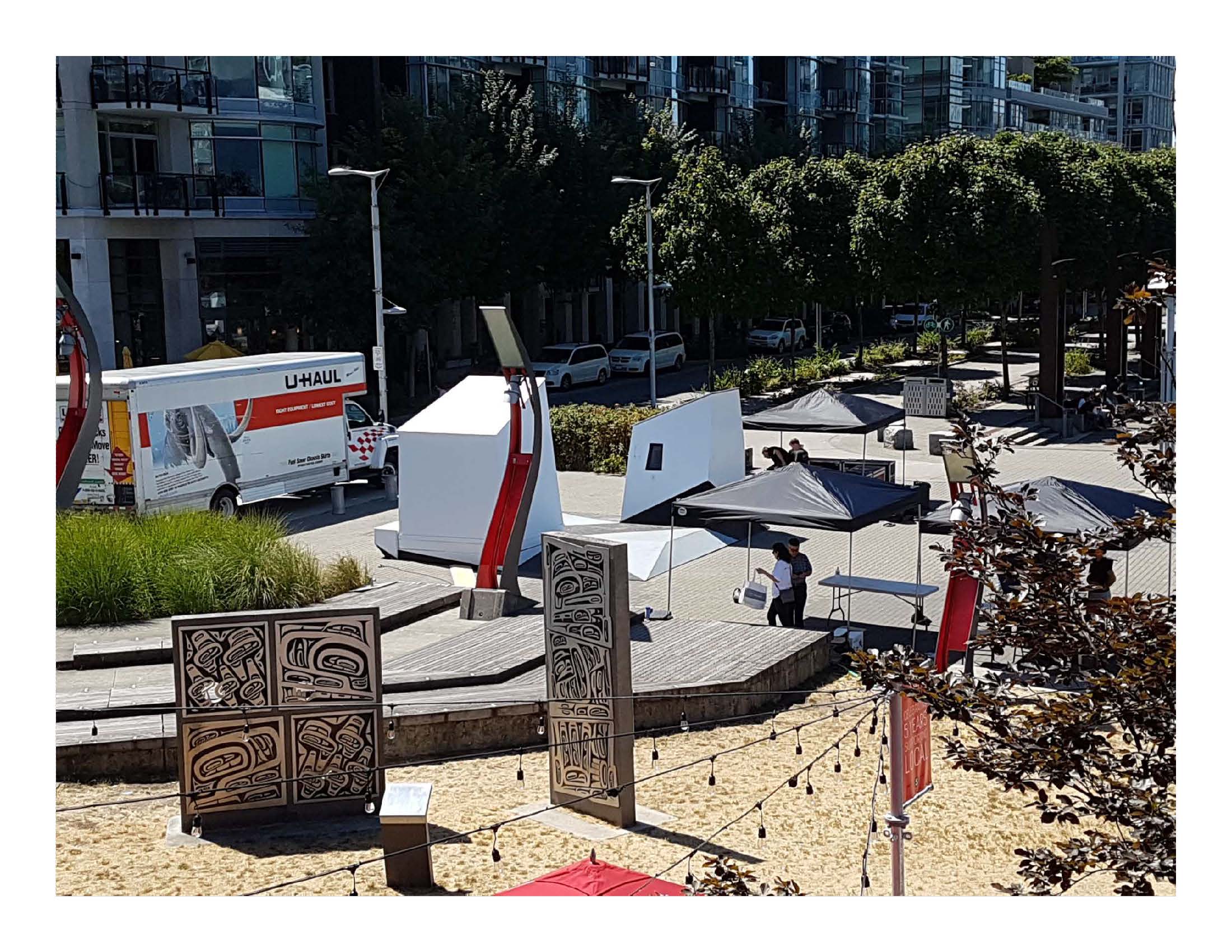
The boxes were placed in Vancouver’s Olympic Village on July 27, 2017, to significant fanfare. Each one contained approximately 976 kg of ice when the competition began. After 18 days, the box built to the BC Building Code contained only 407 kg of ice, while the Passive House box still had 639 kg, despite outdoor temperatures reaching 90°F (32°C). Even BC’s Building Code—which was and continues to be more rigorous than most codes around the world—could not compete with Passive House standards.

The North American Road Trip

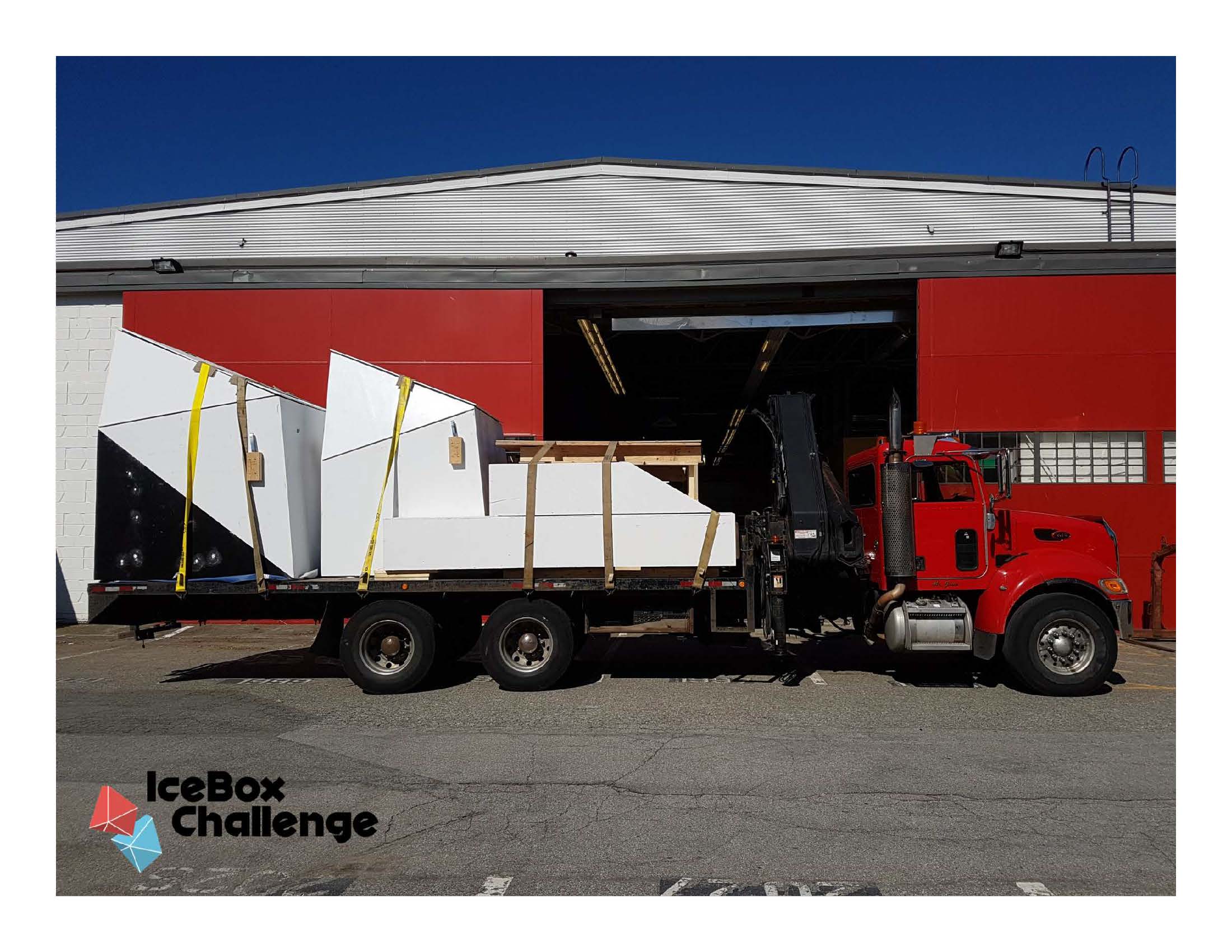
What came next for the boxes was a tour that lasted more than a year and included more than 10,000 miles.

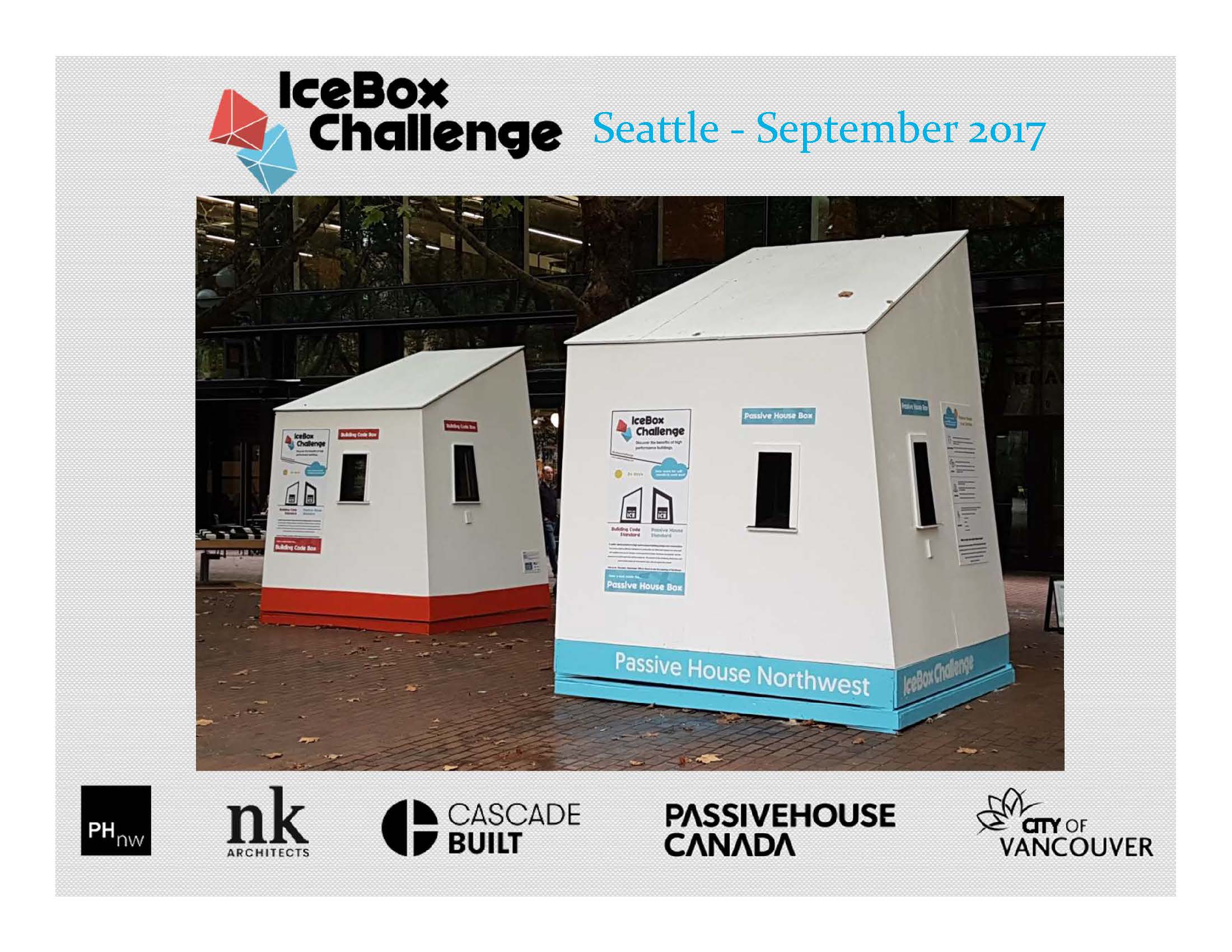
Passive House Accelerator Director Zack Semke heard about the Vancouver event while still working with Shift Zero and Nicholson Kovalchick Architects in Seattle and asked whether the boxes could travel to his city for a similar demonstration. St-Amour told him that it would be no problem, though he recognized that a few adjustments had to be made to the envelope to make the code-built box more in line with typical homes in Washington State, which are significantly leakier than their BC counterparts. St-Amour laughed as he explained that these “adjustments” were made with a drill.

In addition, St-Amour noted that a single window made the viewing of the melting ice in the daytime a little difficult, so they installed another window so natural light could backlit the ice. They also added a basic lighting system, so that people could look into the boxes at night. The boxes were then put on display in Seattle’s Occidental Park (see video below).

1920x1080 Image

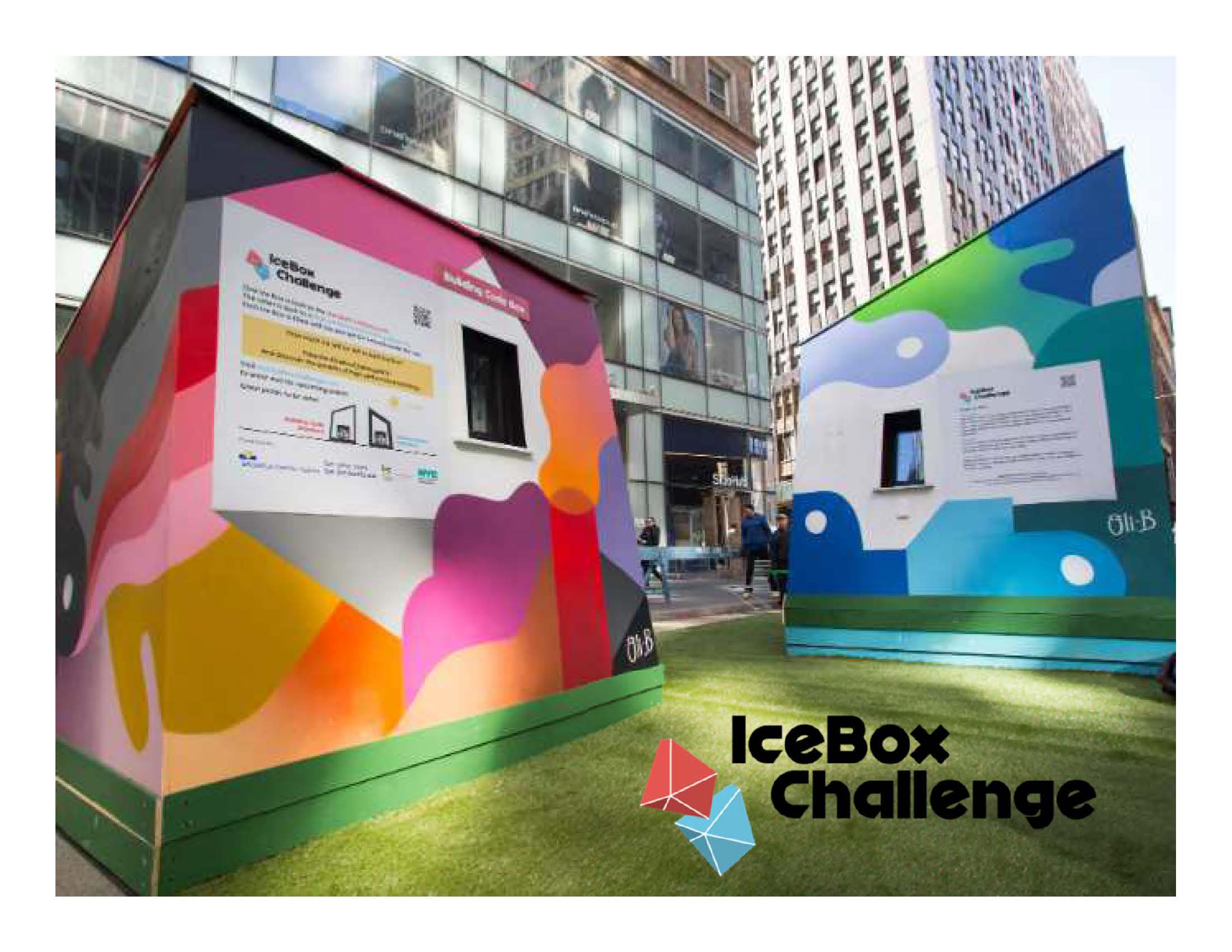
After Seattle, the boxes wintered with Birdsmouth Construction in Portland, Oregon. In the spring, they were shipped to New York City to prepare for a monthslong road trip that became known as the East Coast Ice Box Challenge. However, before their unveiling under the bright lights of Manhattan’s Garment District that April, the Brussels Capital-Region commissioned Oli-B, a Belgian street artist, to give the boxes some additional color.

Laura Blau and team setting up the Philadelphia Ice Box Challenge at the Navy Yard in June 2018. A video about the event can be viewed below. Photo courtesy of Laura Blau

After the stop in New York, Challenges were held in Philadelphia and Washington, D.C. During the former, a television crew met up with Laura Blau of BluPath Design, who became a Certified Passive House Consultant in 2009 (one of two in Philadelphia) and earned her Certified Passive House Builder credential in 2012. The final stop for the year was Pittsburgh, where the display helped promote the annual conference of the North American Passive House Network—now the Passive House Network (PHN)—cohosted that year with Passive House Western Pennsylvania. A team in California had independently built their own pair of boxes, one to the state’s code and one to Passive House standards, for the same organization’s fall 2017 conference in Oakland (see video below). Like St-Amour, they too had been influenced by Die Eisblock-Wette in Vienna.

1920x1080 Image
1920x1080 Image

Since that time, Ice Box Challenges have been held throughout South America, Europe, India, Australia, and New Zealand. In each case, the Passive House box wins. Sometimes the margin is wide enough that the code-built box runs out of ice before the competition even ends.

The Ice Box Challenge Sydney took place in 2022. The boxes were set up in Martin Place, one of the busiest hubs in the Australian city’s Central Business District. Photo courtesy of the Australian Passive House Association

This is precisely what happened in Montréal in 2025, according to Mahnaz Nikbakht. Nikbakht is the President of Bâtiment Passif Québec (BPQ), the premier Passive House organization in Québec and Francophone Canada, and she has been a leading figure in sustainable construction standards for more than 20 years. She also serves as Architectural Specifications Manager for Ottawa, Québec, and Atlantic Canada at ROCKWOOL North America, which was also one of the sponsors of the 2018 East Coast Ice Box Challenge.

Nikbakht noted that the Montréal Challenge took place during three exceptionally hot weeks in July 2025, and the entire block of ice within the box built to the Québec Construction Code melted. The ice blocks in the two boxes that followed the principles of Passive House construction survived with more than just a little room to spare.

A Challenge for Students

Unlike other Ice Box Challenges, the one taking place in Montréal is not simply a contest between a code-built box and one built to meet Passive House standards. Instead, it is a broader competition between student-led teams. The 2025 Challenge was organized by École de technologie supérieure (ÉTS) instructor Sébastien Jacquet and members of the student team from ÉTS, with funding from ÉTS and the Institut AdapT. The code-built box was constructed by professionals from BPQ. The two Passive House boxes were constructed by teams from ÉTS and Concordia University operating under the names HABiTEK and CryoCubz, respectively. Both student entries did well enough that the organizers declined to name a single winner, though Concordia's box preserved 386.4 kilograms of its 816.5-kilogram block compared to HABiTEK's 333.8.

Members of the BPQ team pose during construction of the code-built box. Photo courtesy of BPQ

The 2025 event drew interest from those who live and work in the area, local media, national media, and even the government of Québec. According to a written exchange with the members of HABiTEK, “The Comité consultatif sur les changements climatiques, the independent body that formally advises the Québec government on climate policy, cited the Ice Box Challenge directly in its ninth advisory report to the Minister of the Environment, submitted in April 2026.” The team added: “Being used as evidence in a formal government advisory report is a different kind of validation than media coverage.”

On account of the event’s impact and popularity, a few members of HABiTEK worked to organize a second Ice Box Challenge with Jacquet for 2026. Among them was Andrés Severeyn Becerra, an engineering student at ÉTS, and one of HABiTEK's leads. He explained in an email that the team and Jacquet began working on the 2026 event in the fall of 2025 to formalize the rules, but they were not finalized for several months, meaning the other teams would not have time to prepare their boxes. The event organizers decided it was best for the team competition to occur on an extended timeline.

The September 2026 Event

Despite the lack of competition, HABiTEK is still independently performing an old-fashioned Ice Box Challenge this September after building a box that meets Passive House performance standards and a code built home. Though HABiTEK is the sole team involved, they have received significant support from sponsors, including 3Dconnexions, Acier Pro-nord, AFG, Alumilex, Atelier Bioclimat, Bâtiment Passif Québec, Cadwork, ENERsign, Flixo, Go Passif, Goodfellow, Heco, Igloo Cellulose, Maison Bioclimat, Métaux Cascadia, Milwaukee, MSL, Placide, Red Bull, Revêtements Lorengers, SIGA, Genium360, ÉTS, and Institut AdapT. Local media has also picked up their story. They will be featured on the television show Drôlement Débrouillard, a program aimed at kids.

We'll be checking back in with HABiTEK later this month to see how the competition went.

The 2027 Event

Preliminary events for next summer's challenge have been taking place since spring 2026. The official Challenge will be held in summer 2027. The event’s organizers are hoping to generate even more enthusiasm than before and to once again increase awareness of the real-world benefits of better building.

The student teams and members of Bâtiment Passif Québec at a networking event in July 2026. Photo courtesy of Bâtiment Passif Québec

"As a group of students, we can't do much yet until we get to the job market," said Severeyn Becerra, who is not only a lead for HABiTEK, but already a Certified Passive House Consultant. "But it's pretty cool to see that a little group of people who are not necessarily experts can do this little project and have such a big impact."

The HABiTEK team's ice box during the 2025 Challenge. Photo courtesy of BPQ

The 2027 present Challenge includes HABiTEK and CryoCubz, as well as a team from Université Laval, a team from Université de Sherbrooke, and possibly even a team from York University in Toronto, according to Nikbakht. As in previous events, the headline objective is to keep a very large ice block frozen for as long as possible through the use of Passive House principles. However, beyond the quantity of ice preserved, teams will be evaluated on the aesthetics and originality of their design (though there are strict limitations on dimensions and each box must include at least one window). Teams will also be scored on how they plan to use the structures once the event ends. Consequently, the ice will be stored in IBC totes instead of being set directly on the floor of the boxes (with drainage), as has been the case in previous Challenges.

Teams are currently testing their prototypes, which have been erected on their respective campuses. Come October, they’ll start examining the data and will make revisions to the design over the course of the school year.

“Part of what we hope a project like the Ice Box Challenge does is make the case, publicly and concretely, that energy performance, construction quality, and climate resilience aren’t three separate issues; they’re the same building problem, and most Quebecers don’t think about their home’s envelope at all until one of them shows up as a spiking bill, a wall that needs repair years too soon, or a cold, dark house during an outage,” the HABiTEK team wrote.

We’ll be checking back in with HABiTEK later this year to learn more about the design of their box, what they learned from their preliminary data, and how they hope to change the way Quebecers think about their buildings. We’ll also hear more from the event’s organizers, particularly BPQ. If you’re interested in sponsoring the event or providing any form of advice or mentorship to students, feel free to drop me a line at [email protected].


Learn More About Passive House in Quebec

Published: September 4, 2026
Author: Jay Fox