clay lead

Inside the First Phius-Certified Single-Family Home in New Hampshire

By Jay Fox

The Clay Brook Passive House has multiple accolades. More than being an elegant two-story home set in the White Mountain National Forest, it’s the first Phius-certified single-family home in New Hampshire. At 17, it also holds the record for the lowest HERS score (without renewables) in the nation. For the owners, these accomplishments are not minor details to mention in passing, but something to trumpet to friends and neighbors around Gorham, NH. They’ve even made shirts that read: “Ask me how I built the first single-family Passive House in New Hampshire with the lowest HERS Score in the country.”

To understand the story of the house and how it came to be, we spoke with Hans Breaux, Principal Architect and Founder of Portland-based Project CO+OP. Like other people of Cajun heritage, his ancestry demonstrates that small communities in remote areas like Canada’s Maritime Provinces or his home state of Louisiana may be fiercely independent and resilient, but that both qualities are oftentimes undergirded by a reliance on local networks that can extend past state lines.

This cooperative approach is well-suited for many rural areas and small towns, particularly in northern New England.

Louisiana Roots

Breaux was in architecture school in Louisiana when hurricanes Katrina and Rita ravaged the Gulf Coast. Though the former is still remembered because of the once-in-a-century generation decade damage that occurred in New Orleans, Rita (which made landfall just one month later) was the most powerful cyclone produced in the Gulf until being tied by Hurricane Milton in 2024. Rita may have diminished in strength before making landfall and spared major population centers, but it still inundated many parts of Texas and Louisiana, including Cajun country.

Knowing that the built environment needs to be responsive to local conditions is something that every architecture student knows by rote. However, seeing that level of destruction gave far more weight to the importance of resiliency in the built environment. That members of his family suffered from mold sensitivities in the aftermath of the storm emphasized that resiliency does not begin and end in the midst of crises—it can extend for months or even years afterward. This realization led Breaux to the belief that the built environment should be neither static nor settled; instead, it needs to be adaptive, and it needs to be responsive to the environment in order to actually keep people safe.

When homes aren’t built well, he says, it can put people in danger. “That created a sense of, ‘Okay, there’s kind of a problem. There are things to solve.”

photo3

Project Details

  • Architect & CPHC: Project CO+OP (Hans Breaux)

  • Builder: Maine Passive House

  • Engineering Consultant: L&L Engineering Services, Inc.

  • Phius/HERS Rater: Advanced Building Analysis (Michael Browne)

  • Photography: Chris Bennett Photography

  • Final certification: June 4, 2024 (Phius CORE 2021)

  • Climate Zone: 6-A

  • Gross floor area (square feet): 2,217

  • Conditioned floor area (square feet): 1,885

  • Total cost: $1,181,661

Walking to Maine

Following graduation in 2010, Breaux decided to hit pause on his career for a few months and to thru-hike the Appalachian Trail. The trail consists of roughly 2,200 miles of trail that snakes through 14 states and reaches its northern terminus at Mount Katahdin near Millinocket, Maine. It is a serious endeavor that people often do in large chunks, sometimes over the course of several years. However, Breaux was able to walk from the Springer Mountain in Ellijay, Georgia (the trail’s southern terminus) to Maine within roughly six months. Once there, he decided to settle in Belfast, a city of around 7,000 in Mid-Coast Maine.

Source: Bureau of Labor Statistics

Breaux was not sure how permanent the relocation would be, and Maine was not the best place to be a recent graduate looking for work as an architect. The global economy was in the throes of the worst recession in almost a century, and Maine’s construction industry was hit particularly hard by the collapse of the housing bubble. After reaching a peak of 8,969 in 2005, newly authorized permits fell for six consecutive years, eventually bottoming out in 2011. Only 2,744 total permits were authorized that year, representing an almost 70% decline from 2005 (see Figure 1).

Breaux eventually found a job with the Belfast Community Coop, a community-owned grocery store that introduced him to the principles of working within a cooperative. Similar to high-performance building, the principles of cooperatives are fairly easy to understand at a high level but can become relatively difficult to implement in real life. Actually seeing them enacted on a day-to-day basis deeply informed Breaux about the importance of hands-on democracy and community engagement.

Don't Go It Alone. Join Our Community.

The Reimagine Buildings Collective brings together building professionals stepping up to tackle climate change.

“Once I got exposed to that, there’s no going back,” he says.

At their core, cooperatives are about democratic decision making, working with other cooperatives, and just having a beneficial impact on the local community, Breaux explains. In practice, cooperatives form a network of people who are committed to improving their community, and he was determined to contribute to his community through better building when the time was right.

drone clay

Once the economy began to improve, he eventually found work as an architect and relocated to Portland, where he worked with both Simons Architects and BRIBURN Architecture. While there, he worked on several really cutting-edge projects, including the Maine Coast Waldorf High School. Located in Freeport, ME, it is the first Passive House-certified high school in the country (Phius+ 2015). Breaux credits BRIBURN Principal and Director of Sustainability Christopher Briley as being one of his mentors.

Breaux was still working with BRIBURN in 2020 when the pandemic began. This proved to be a pivotal year for Breaux because he decided to combine what he learned from Briley and BRIBURN and his experience with cooperatives to start his own firm, Project CO+OP. “I work with other people on certain things, and sometimes it's multiple projects with the same person, but we still embody cooperative principles on how we work together,” he says.

Source: Bureau of Labor Statistics

Now a licensed architect in Maine, Massachusetts, and New Hampshire, he’s worked on several multifamily projects (including some missing middle housing), including as a Certified Passive House Consultant (CPHC) and a sustainability consultant. He also lectures on architecture and sustainability at the University of Maine at Augusta, consulted on local referenda within Portland around energy codes, co-authored state legislation on bringing sustainability to affordable housing, and even helped with the renovation of a local food co-op in Portland.

Source: Bureau of Labor Statistics

The last six years have been a busy time for a lot of people in the architecture, engineering, and consulting sector, especially in northern New England, because 2020 proved to be a pivotal year for many people. The start of the pandemic saw a large exodus of white-collar workers out of dense urban centers like New York, Philadelphia, and Boston, and into more rural states like Maine, Vermont, and New Hampshire. Given that population growth had been stagnant or even in decline in these states (see figures 2, 3, and 4), many of the homes that were purchased during the frenzied months of 2020 and even 2021 needed substantial work.

Source: Bureau of Labor Statistics

As Breaux explains, a lot of the work that occurred in Maine during that time included improvements to home performance. Anyone who has had to pay for heating oil through a winter in Maine knows how expensive poor performance is and that even when the heat is constantly running it’s not comfortable to live in a drafty home. This has helped to create more demand for high-performance buildings and to expand the network of builders and professionals who can reliably and cost-effectively deliver passive buildings. For owners, the decision to “go passive” ends up being entirely practical.

“An inefficient building just doesn’t make sense,” Breaux says. “It’s not a political issue.”

Designing for Longevity

As the owners of Clay Brook Passive House will tell you, not everyone bought existing homes in 2020. They purchased a property in New Hampshire’s White Mountains near the Maine border that sits just eight miles away from Mount Washington. The area is remote, rugged, and ideal for a family hoping to enjoy the natural world after years of living in Boston.

Courtesy of Hans Breaux

Performance Data

  • HERS Index Score: 17 (without PV)

  • Heating Demand: 11.79 kBTU/ft2·yr

  • Peak Heating: 5.5 kBTU/ft2·yr

  • Cooling Demand: 0.64 kBTU/ft2·yr

  • Peak Cooling: 0.69 kBTU/ft2·yr

  • Source Energy: 5001 kWh/person·yr

  • Airtightness: 0.019 CFM50/ft2

  • Uw-value: 0.1713 Btu/h·ft2·F

  • Glazing SHGC: 0.37

The owners first engaged Bethel-based builder Maine Passive House (MPH) that year. In addition to appreciating the quality of MPH’s work, they also shared their values and commitment to ethical building and concern for the environment. MPH CEO Katrina Bell and MPH Founder Jesper Kruse then contacted Breaux and Project CO+OP to be the architect and energy modeler.

As Breaux explains, the owners needed minimal convincing to build to Passive House standards. They were easily sold on the improved air quality and other health benefits. Moreover, they were persuaded to take the home through certification because they wanted the house to serve as a model for others and because they recognized that certification is a demonstration of commitment to one’s values. “You’re really saying to the rest of the world, ‘I’m going to put my resources towards doing whatever I can in this building to have a positive impact,’” Breaux says.

The owners were deeply involved in shaping the direction of Breaux’s design. One of them works in IT and Breaux says he grew more interested in energy modeling as the project progressed. In addition to geeking out about operational energy, they also became fixated on the embodied carbon of the project and prioritized the use of natural materials and minimization of disturbances to the landscape when possible. For example, the driveway is made up of pervious, as opposed to impervious, asphalt. Another priority was long-term viability. Specifically, the owners said they wanted their home designed so that it remains comfortable for 250 years.

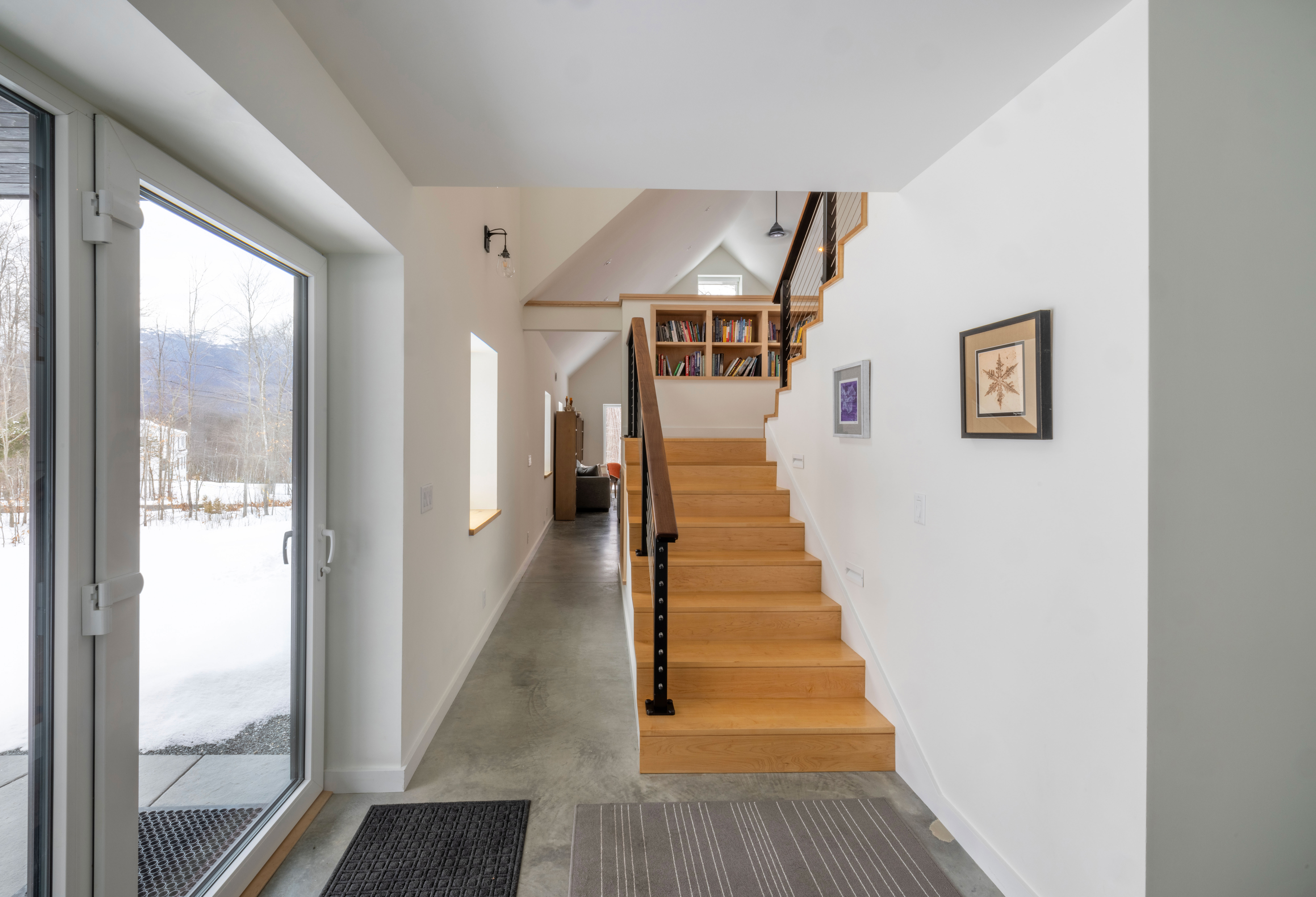
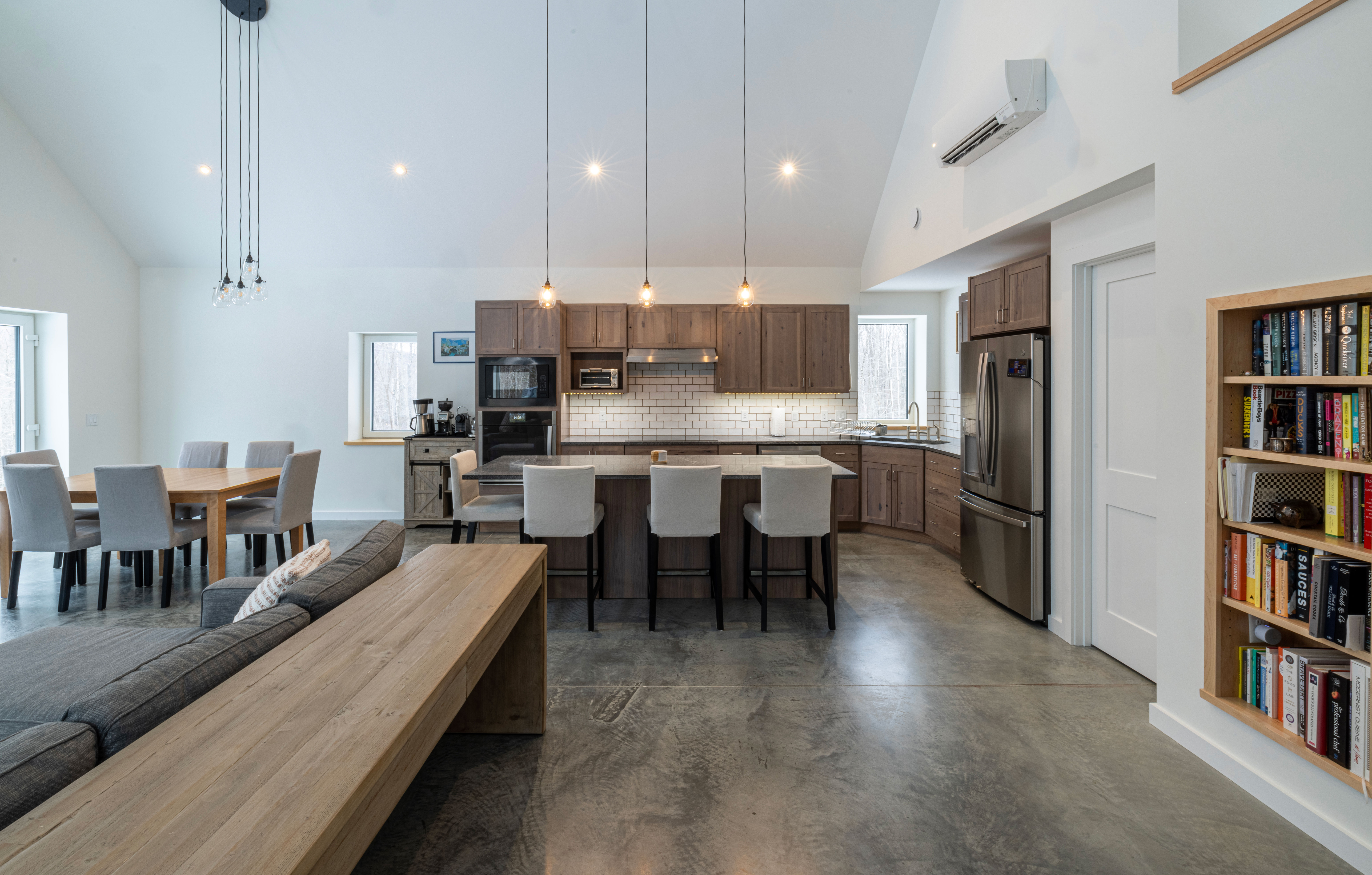
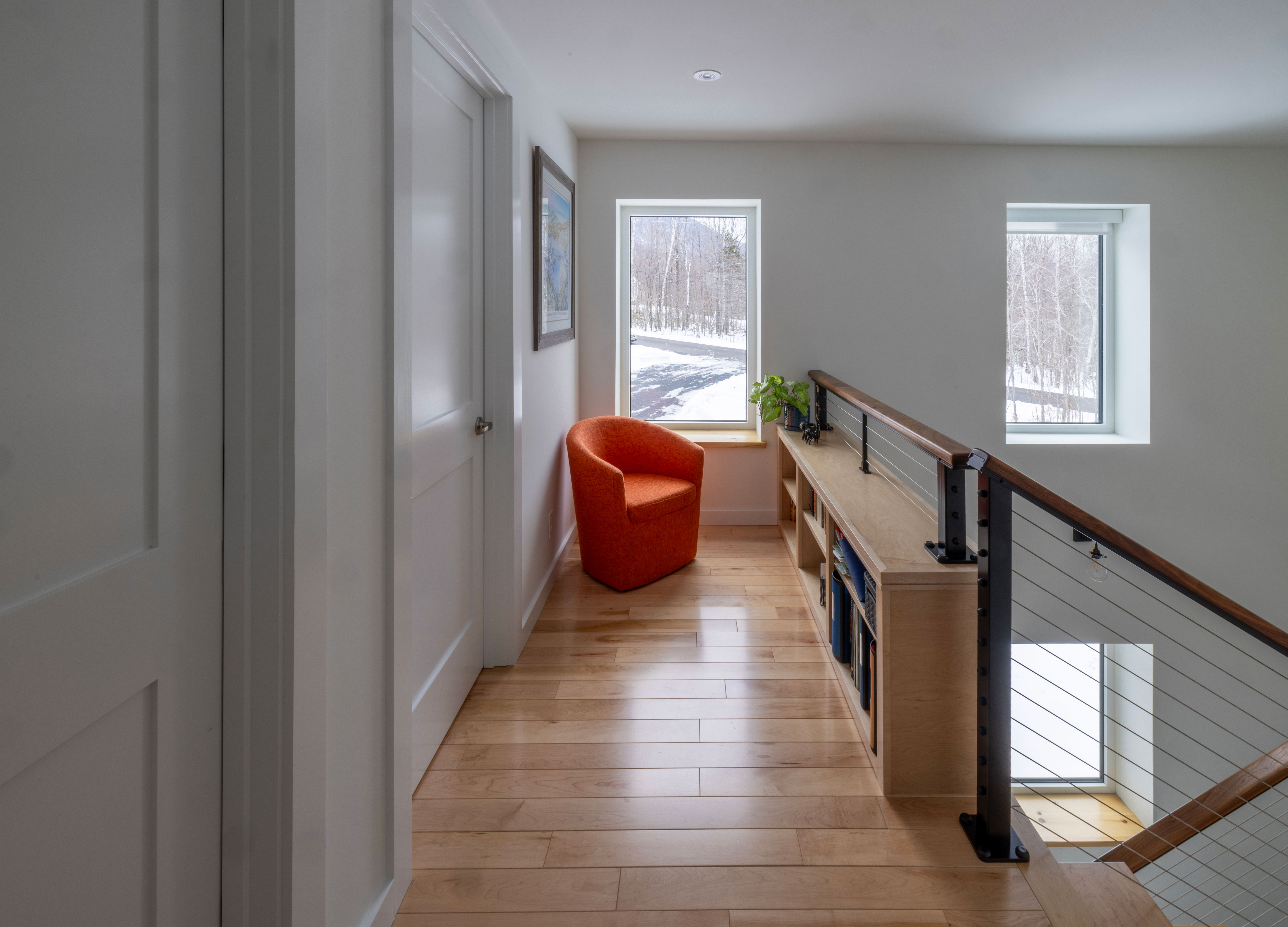
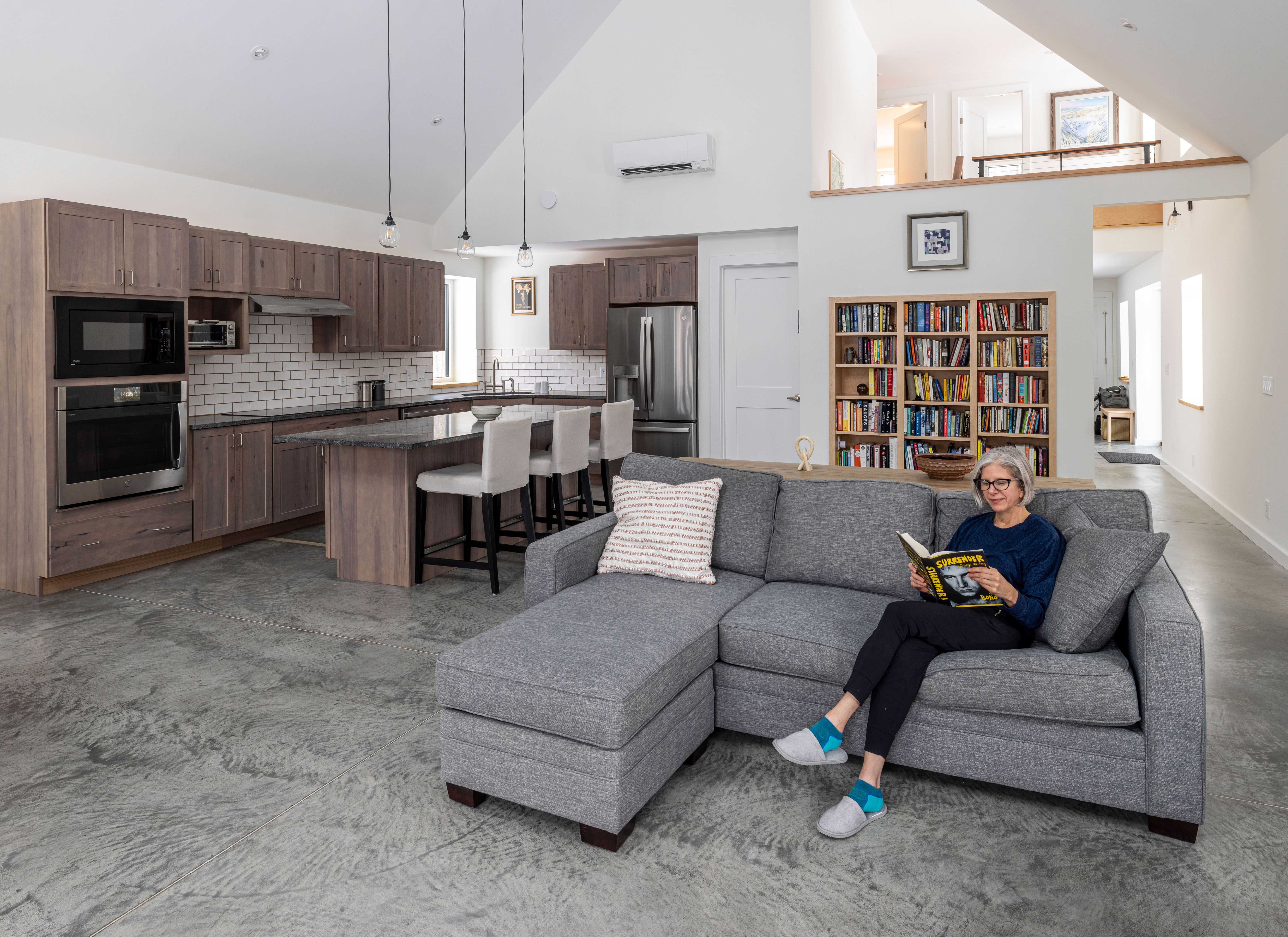
The two-level home contains two bedrooms, two offices, two bathrooms, and an unconditioned garage with hookups for two electric cars. Courtesy of Hans Breaux

Modeling for this kind of longevity is no easy task, but Breaux notes that strategies implicit in passive design aligned with that goal. For example, simplified geometries and compact form factors are a common (though not strictly necessary) feature of passive buildings because they reduce thermal bridging opportunities and are more energy efficient. Buildings with lower surface area to internal volume ratios are also more durable because their envelopes are exposed to fewer environmental stressors that can lead to degradation. The commitment to efficiency and durability also aligned with the owners’ desire for design that Breaux describes as “direct.”

In keeping with efforts to minimize disturbances to the landscape, only a few trees were cleared from the site to make way for the home, to ensure a noncombustible perimeter, and to (eventually) optimize the photovoltaic system*. The property remains heavily forested, so there is some natural shading in the summer. Breaux notes that the uPVC triple-pane windows by Logic Windows & Doors obtained through Pinnacle Windows Solutions were oriented to take advantage of western and southern light in the winter, as well as to enjoy direct views of Mount Washington on clear days.

Look Inside
The effective R-value of the wall assembly is R-46.828. Courtesy of Hans Breaux

Building for Performance and Endurance

Construction began in fall 2022 with the excavation of a shallow concrete foundation. The four-inch slab floats primarily on a 16-inch layer of Glavel, a Vermont-based manufacturer of foamed glass aggregate. In addition to offering excellent drainage and good thermal insulation (R-1.7 per inch, resulting in an average R-value of 27 for the foundation), the material has very low embodied carbon because it is made from recycled glass in an electric kiln with renewable energy. “It’s also incredibly light,” Breaux says. “It’s like moving bags of potato chips.”

Beaux notes that a small amount of foam was reluctantly used under the footings. This decision was not taken lightly, neither was the decision to use concrete in the foundation for the polished floor on the ground level. While everyone involved with Clay Brook prioritized using natural and local materials when possible, they also recognized that durability and long-term viability are deserving of similar considerations. Despite its high embodied carbon, concrete’s durability made it a good and cost-effective options.

Other assemblies contained far more natural materials. The walls are double stud with a continuous layer of dense-pack cellulose insulation and plywood for the sheathing. Inboard of that, they used Pro Clima Intello for the smart vapor barrier (see Figure 6) over plywood, which is more vapor open than OSB. The service cavity is uninsulated and protects the vapor control membrane and air control layers. Phius expressed some concern about condensation on the inside face of the sheathing on account of the lack of exterior insulation outbound of the sheathing, the lack of insulation in the service cavities, and the extreme cold in the area. To assuage his concerns, the team performed an additional dynamic hygrothermal model of the assembly to prove that the wall is safe, and the builder even installed monitors in the wall to sense for moisture buildup.

While there are two distinct roof assemblies, they have similar effective R-values. One consists of parallel chord trusses filled with dense pack cellulose (R-82), while the other loose fill cellulose within raised heel gable trusses (R-83).

The mechanical systems include a hybrid air-source heat pump domestic hot water heater (American Water Heaters), air-source heat pumps for heating and cooling by Mitsubishi, and a Zehnder ERV. Breaux refers to the Zehnder as being the “gold standard” and vital to making sure the house remains comfortable. While equally vital, the Mitsubishi system has not gotten nearly as much use. Though there are two units for the heat pump system, one for each floor of the house, they’ve only ever turned on the one located on the ground floor. Even then, they hardly use it.

“The house is incredibly comfortable.”

A Model for the Future

“All models are wrong. Some models are useful,” those steeped in building science are prone to saying. Given the fact that our climate is rapidly changing in ways that models have a difficult time predicting and because modeling human behavior within a home is far from an exact science, energy use in the real-world tends to deviate significantly from models—especially during the first year of occupancy.

So, it was a bit of surprise when Breaux reviewed the real-world data after that first year of occupancy. The owners of the Clay Brook Passive House used almost exactly the same amount of energy as Breaux’s energy modeling predicted they would during the first year of operation. The modeling predicted a total energy use of 8,027.51 kWh/yr, and the actual usage was 8,039 kWh the first year of occupancy.

This didn’t happen by accident. Breaux has years of experience working on Passive House projects and MPH is extremely experienced when it comes to high-performance building practices, staying on schedule, and managing a complicated construction site. In addition to honing their skills in the field and the studio, Breaux, Bell, and Kruse have also established a level of mutual trust and respect from working together on previous projects. That relationship has only been galvanized through participating in local trade groups and nonprofits like passivhausMAINE and having mentors that one can rely on.

The owners with Breaux (center left) and Bell (center right).

“There’s a lot of trust between me and the builder, and that was a big part of the project,” Breaux says. “If they wanted to do a detail in a certain way, they would literally sketch it on a napkin and send it to me. I would draw a couple lines and send it back to them.” That sense of camaraderie extended to the owners, who Breaux still considers friends. “We made sure everyone on the team had a great rapport and worked at that all the time,” he says.

Creating better buildings requires science. It requires more refined building techniques. It demands materials that can maintain integrity for decades or even centuries. However, as Clay Brook Passive House demonstrates, these demands are far easier to meet when you have a strong sense of community and a group of people who share your passion and dedication.

*The owners installed the PV system in the summer of 2025 and are expecting to receive Phius ZERO certification soon.


Published: February 27, 2026
Author: Jay Fox
Categories: Article, Phius, Single Family