phfe cover

Passive House for Everyone Brings Hands-On Training to Brooklyn Public School

By Jay Fox

This December, juniors and seniors at Boys and Girls High School in Brooklyn’s Bedford-Stuyvesant neighborhood will begin applying the principles of Passive House design and construction at the New York City Public School Climate Education Passive House Training Center. The center has turned an underutilized classroom into a climate education hub for equitable workforce development with a curriculum designed to promote climate literacy and deliver hands-on skills and training in energy-efficient construction and high-performance building systems. 

The program is being pioneered by Passive House for Everyone and has been supported by long-term partnerships with New York City Public Schools (NYCPS), the NYCPS Office of Energy and Sustainability, NYCPS Office of Student Pathways, the Fund for NYCPS, and the Pratt Center for Community Development, as well as the firm ChoShields Studio.
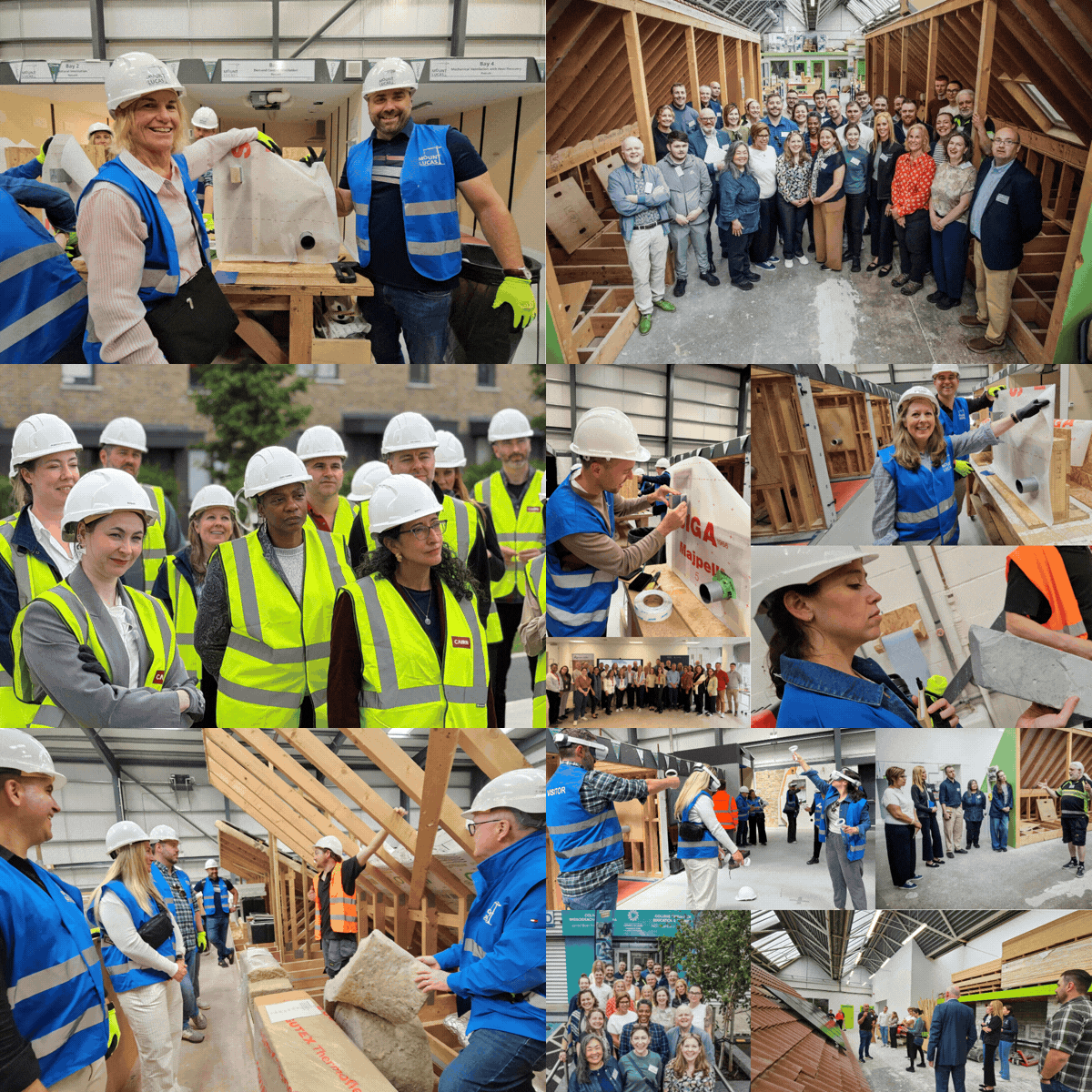
The delegation from New York saw firsthand how Ireland is training the green workforce of the future.

Passive House for Everyone Means Everyone

Passive House for Everyone is a nonprofit that was created in 2020 by In Cho, an architect, instructor at Pratt, and founding principal of ChoShields Studio. The guiding principle of the organization is that students should be introduced to the principles of Passive House as early as possible, so that they learn the basics of high-performance building and that awareness might encourage them to consider  a career in the architecture, engineering, and construction industries. These lessons can also grow awareness of careers in building science and the wider green economy, while also promoting the recent mandate in New York State that climate education be a part of the curriculum in all public schools. Cho believes the principles of passive building should become as widely understood as recycling.

Cho’s efforts have placed a strong emphasis on expanding opportunities in New York City public schools, and PHFE’s work rests on three pillars: Education, Green Workforce Development, and Coalition Building. In June 2026, Cho traveled to Ireland as part of a New York delegation to witness how those principles have been applied there, to learn how the country rapidly scaled its high-performance building workforce, and to see what lessons could be brought home to New York. The delegation included senior leaders from Pratt, the City University of New York, the New York State Energy Research and Development Authority (NYSERDA), and organizations dedicated to workforce development and bringing more women into the AEC industry.

Ireland has become renowned for how quickly the country has scaled its high-performance building industry, and the New York delegation got a firsthand look at what a successful green skills training program looks like. SOLAS, an Irish state agency, hosted the delegation, which toured Limerick’s College of Further Education and Training Green Innovation Campus, Cairn Homes’ Seven Mills development in Dublin, and a training facility at Mount Lucas in County Offaly.  

“Ireland showed us what’s possible when everyone works in lockstep,” says Caroline Zayas King of Passive House for Everyone. “If Passive House is going to be for everyone, we must collaborate and educate. Skilled workers, architects, policymakers, and communities all need to be informed, engaged, and working toward the same goal.”

Building out the mock-up structure for the New York City Public School Climate Education Passive House Training Center. More photos below.

Delivering Training and Equitable Workforce Development

The center’s pilot cohort will serve about 45 students across three career and technical education pathways: architectural drafting, HVAC, and electrical work. The pilot is expected to begin next month and run through February. Cho developed the curriculum and is the official trainer. Students will be taught a holistic approach to building informed by passive principles—such as continuous insulation, airtightness, thermal bridging—while also learning about energy modeling, high-performance fenestration systems, and advanced HVAC systems.

image002
image001 (1) image004 (2)
Left: The mock-up structure during construction (from left to right: German Sent [Axea Construction Group], In Cho [Passive House for Everyone], Caroline Zayas King [Passive House for Everyone], and Chris Goodwin [Axea Construction Group]). Top right: Cho, Goodwin, and Sent walking through drawings on the structure. Bottom right: the solar panels on the mock-up structure. Photos courtesy of Passive House for Everyone.

The center welcomes students to an immersive learning environment where they can see the principles of Passive House design and construction in action by working on a mock-up structure that even includes two solar panels. The program will offer students a certificate in Fundamentals of Healthy, Energy-Efficient, Low-Carbon Buildings. The certificate, issued by Passive House for Everyone, recognizes foundational knowledge of 

  • the Passive House framework, 

  • building energy efficiency, 

  • climate-responsive building strategies,

  • healthy indoor environments, and

  • building decarbonization.

The certificate also acknowledges that students understand the necessity of interdisciplinary collaboration to create healthy, comfortable, resilient, energy-efficient, and low-carbon buildings.

Though short, the curriculum's real strength is that it gives students the chance to understand how adjacent trades work with one another and to get a bird’s eye view of the entire building process. Conventional trades education is usually heavily siloed, and what Cho sees in the field is that workers trained that way can undermine each other's work, particularly when it comes to air sealing. "You're not just learning solar, you're not just learning HVAC, but the whole system. It’s important to see the big picture," Zayas King says. An electrician who understands why the envelope matters will think twice before cutting holes through a membrane on the exterior wall.

The high school’s location is also important from a health equity perspective. Bedford-Stuyvesant is a Designated Disadvantaged Community that has faced challenges arising from disinvestment for decades. Moreover, poorly maintained buildings and proximity to industry have contributed to higher childhood asthma rates than other parts of New York City. Students who learn the importance of air sealing and moisture control, and how to address both, can then share that knowledge with others in their community even if they decide not to become practitioners.

A Growing Movement

Passive House for Everyone hopes to expand the program to other schools around New York City and beyond. As energy codes become more stringent, those who work in design and construction will need to learn new skills to meet efficiency targets and drive down building emissions. Upskilling among the trades is vital to achieving these goals, and introducing passive building methodologies to those who are just beginning their careers provides them with a path to good-paying and stable jobs. One piece that is important to the equation is industry support, and Passive House for Everyone is looking for partners to join panels, host field trips, and even offer internships. 

“When students meet professionals doing this work, these careers start to feel real, and their sense of what’s possible expands. Every connection they make opens another door,” Zayas King says.

Published: November 9, 2026
Contributor: Jay Fox