image three arts signage

The Art of Balancing Preservation and Performance

By Jay Fox

The Three Arts Club first opened its doors in 1927. Designed by architect George de Gersdorff, the nine-story, steel frame Colonial Revival at 340 West 85th Street was the first residential club in the United States to offer housing for women pursuing educations and careers in the “three arts”: visual arts, performing arts, and literary arts. It operated in that capacity until the early 1950s, when the building became the Brandon Residence for Women.

Though the building lost some of its elegance following its tenure as the Three Arts Club, it still contains a wealth of historic details that have largely been undisturbed for the past century. More than being ornamental or even adding to the character of the building, they also capture the kind of craftsmanship that was common in upscale buildings from the 1920s and the spirit of those times. Due to these elements’ excellent condition and the club’s contribution to the women’s rights movement, Three Arts was designated as a contributing building to the Riverside-West End Historic District by New York City’s Landmarks Preservation Commission in 2012, and has more recently been listed on the registries of historic places by New York State and the National Parks Service.

The approximately 51,500-square-foot building also plans to obtain another designation in the near future: EnerPHit certified.

A photograph of the Three Arts Club circa 1929. All photos courtesy of the West Side Federation for Senior and Supportive Housing.

Three Arts’ Recent History

The West Side Federation for Senior and Supportive Housing (WSFSSH) acquired Three Arts in 2017 with funding through the New York City Department of Housing Preservation and Development (HPD). At the time, the building contained (and currently contains) 124 single-room occupancy (SRO) units. There is also a two-bedroom apartment for the building’s superintendent in the penthouse.

The city approached WSFSSH about the project for two reasons. First and foremost, WSFSSH has a sterling reputation for working on behalf of low-income seniors in New York City, as they’ve provided housing and supportive services for this often-marginalized group for almost 50 years. The organization was founded by a collection of social service agencies, community organizations, and religious groups at a time when there were numerous SRO units on the Upper West Side, and they have expanded into Harlem, the South Bronx, and Chelsea.

At present, WSFSSH manages 31 properties and 2,400 units of affordable housing. While they do house some family units, the majority of their portfolio continues to consist of studio and single-bedroom apartments for low-income seniors, including those who have spent years navigating the city’s shelter system and struggle with mental illnesses and substance use disorders. To ensure they have access to care for their conditions, WSFSSH provides in-house supportive services to residents in need.

The second reason the city approached WSFSSH was because there were concerns that the building was going to be purchased by a private developer, gutted, and converted into luxury condos. As the city is already experiencing a shortage of affordable housing, especially in many parts of Manhattan, this outcome was less than desirable.

According to WSFSSH Director of Real Estate Development Nicole Marrocco, the opportunity proved serendipitous. Right when the city approached them with the offer, WSFSSH was about to demolish a shelter in a walk-up building on West 108th Street and replace it with a new, larger shelter purpose-built for seniors. Before moving ahead with the project, WSFSSH needed a location where they could temporarily relocate the shelter while work was being conducted.

Redirecting individuals to Three Arts proved to be an ideal solution, so WSFSSH purchased the building, and operated it as a temporary replacement to the West 108th Street shelter until work on the shelter was completed in 2022. Its role as a shelter during the COVID-19 pandemic also changed WSFSSH’s plans for Three Arts in several crucial ways.

Three Arts as it looks today.

Recognizing Three Arts’ Potential

From the start, WSFSSH had anticipated creating permanent supportive housing for seniors at Three Arts, and they knew that this would require some form of renovation. They engaged Curtis + Ginsberg Architects (C+GA) immediately after the purchase in 2017 to perform some preliminary work. The focus at that time was the heating and cooling systems for some of the public spaces in the basement and on the ground floor. The subsequent plan was to commence work on the residential floors once Three Arts had fulfilled its purpose as a temporary replacement for the West 108th Street shelter. According to Marrocco, this update was initially meant to be a “refresh” rather than a deep energy retrofit.

WSFSSH’s experience during the COVID-19 pandemic led them to reconsider. As Marrocco explains, they came to appreciate how personal living spaces can reduce the spread of illness and provide a form of refuge during emergencies, how older residents often need additional space to accommodate home health aides, and that many residents will remain in these units for the rest of their lives.

As a result, WSFSSH and C+GA began exploring how to cost-effectively maximize the number of units and ensure the comfort and safety of residents. Several floor plans were proposed, but they ultimately decided to convert the existing floorplates, which are primarily one-room units with shared bathrooms and no cooking facilities, into efficiency units with private bathrooms and kitchens. Marrocco notes that it is the more expensive option, but that it allows residents to shelter in place more effectively and gives them more comfort and privacy to age in place, particularly when being visited by home health aides.

Don't Go It Alone. Join Our Community.

The Reimagine Buildings Collective brings together building professionals stepping up to tackle climate change.

Once they opted to pursue the more extensive retrofit, they began exploring the possibility of Passive House certification through the Passive House Institute’s EnerPHit program. It was determined early on that PHI’s component pathway was the more viable route to certification. More than just providing residents with greater comfort and a healthier living space, they recognized that Passive House buildings can remain habitable even when the power is out and occupants are required to shelter in place.

“If there's a heat event and the power goes out, seniors who are living in this building will still be able to live comfortably for at least several days,” Marrocco says. Passive House buildings also stay warm in the winter because they are so airtight and well-insulated.

However, EnerPHit retrofits are tricky in any building, and Three Arts had several factors further complicating the plan. To start, Three Arts is within a historic district, which already places restrictions on permissible modifications to the building’s exterior. WSFSSH also recognized that state and federal historic tax credits through New York State’s Historic Preservation Office (SHPO) and the National Park Service would be necessary to make the project financially viable, and that preservation would oftentimes need to take priority over improved performance. Particularly on the ground floor, there are numerous rooms that have barely been touched over the last century, which meant that they could not be altered.

To see if it was even possible to both preserve the building’s many historic elements and enhance its overall performance, the team applied for Early Design Support through the New York State Energy Research and Development Authority’s (NYSERDA) Buildings of Excellence technical assistance program. NYSERDA awarded the design team funding to perform a feasibility study, and they recruited Steven Winter Associates (SWA) to consult. SWA confirmed that EnerPHit certification was technically possible with the right strategy, so the team committed themselves to the retrofit, which led to an award as a demonstration project in Round Four of NYSERDA’s Buildings of Excellence Competition.

“I don't know how far we could have gotten…had we not had that early ability and financial backing by NYSERDA to study these things,” C+GA Associate Ryan Esparza says.

As of November 2025, construction on the 24-month project has just begun.

The Balancing Act

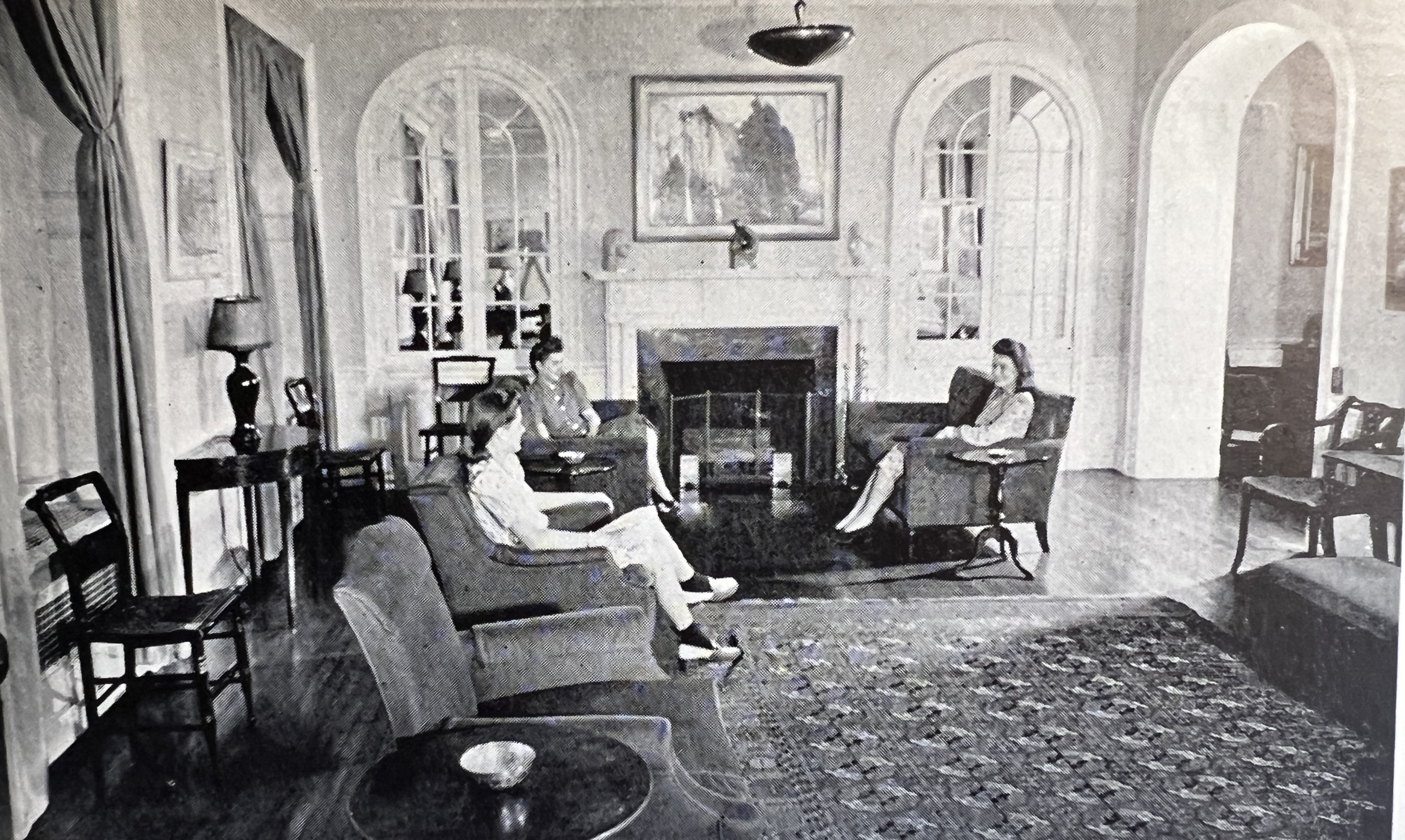
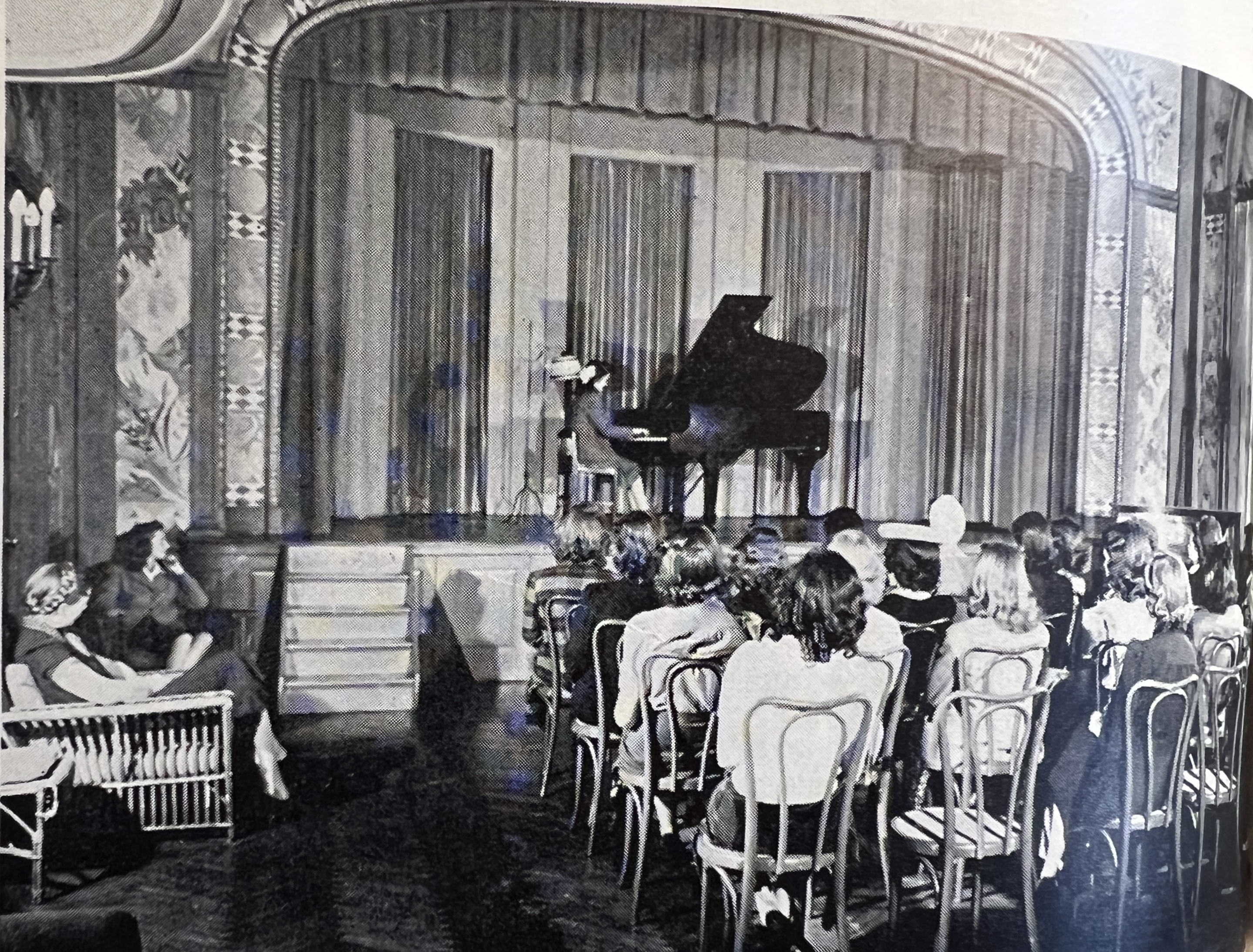
“Largely, the building is still the same as it was,” Esparza says. “The first floor still has these grand spaces. There's a wood paneled library off the entrance to the right,” he adds. To the left is a space that was likely a receiving room for guests. Continuing on, one enters a double-height ballroom that has a stage at one end and a balcony at the other. The ballroom also contains three double-height, arched windows that are double-hung and have never been replaced. The basement contains a commercial kitchen and a large dining room with a historic terrazzo floor that remains in good condition and will be restored to its Art Deco glory.

The building's current lobby and the entrance to the ballroom.

Because these areas of the building are designated historic spaces, alterations must be kept to a minimum, which limits the team’s ability to add interior insulation. The team is also prevented from adding exterior insulation because the façade is protected. Due to these restrictions, PHI has granted the team a modified carve-out for these spaces, which include parts of the basement, first floor, and second floor. They will still have to reach EnerPHit’s stringent air tightness requirements (1.0 ACH50), but they have been exempted from requirements for heating and cooling under EnerPHit. As a result, they will still perform rigorous air sealing on these floors—including around the three double-height windows in the ballroom, which will no longer be operable—but otherwise they will take a very hands-off approach to the historic features.

For walls that can be modified, insulation will be added on the interior side of the assembly. The strategy for historic retrofitting was first pioneered by SWA during the retrofit of New York University’s Rubin Hall, and it can be replicated at Three Arts because the two buildings were constructed using similar materials and within a few years of one another. Currently, the wall system on the above-grade floors of Three Arts is composed of masonry or stone, two layers of terracotta block, and approximately an inch of plaster. According to Esparza, the team plans to keep the full assembly in place where possible, though plaster will need to be removed near steam risers and around columns. “There's a way in which this building has been breathing and absorbing and drying for the last 100 years, and we don't want to do anything that would negatively impact that,” Esparza explains.

One the three arched windows in the ballroom.

On the interior they will add a vapor permeable air barrier to the plaster, an inch of Rockwool insulation, 1.5-inch studs with Rockwool insulation between the studs, and then gypsum board. While this does eliminate some usable square footage, it will ultimately make a far more comfortable living space and ensure the durability of Three Arts for at least another century. The basement wall system is comprised of layers of masonry, but they’ll apply the new assembly being used on the above-grade floors where possible.

“Any space that we can insulate, we will,” Esparza says.

With the exception of the three double-height windows in the ballroom, Three Arts’ windows are no longer original and will be replaced with windows that have been certified by PHI. The team will aim to recreate the appearance of the original, six-over-six windows from the 1920s with simulated double hung models. To comply with the City’s Landmarks Preservation Commission, the framing material for the windows facing West 85th Street will be wood and manufactured by Zola Windows, while the framing material for the windows that do not face the street will be uPVC and manufactured by Intus. As for the windows in the penthouse, which are different from the majority of the windows and have a more industrial aesthetic, they will be fixed aluminum (also by Zola) but will replicate the historic steel casement windows.

The interior of the ballroom and the balcony.

“Historic  preservationists really care about what your windows look like,” Marrocco says.

Perhaps the most significant changes to the building will take place on floors four through eight, which are residential levels. The floorplates for these five floors currently are and will be more or less the same. Currently, each floor contains 25 or 26 one-room units with two shared bathrooms. Once renovations are complete, each floor will contain nine or ten efficiency units; the third floor will be restored to being a residential floor with another ten efficiency units; and the second floor will have four residential units that face the street, offices, and spaces for social services.

On floors four through eight, the team initially thought they were going to be able to only demolish the walls separating the apartments from one another, thereby preserving the outline of the existing C-shaped corridor. This strategy was abandoned when the team realized that the interior walls are structurally significant, and that a more methodical demolition plan would be required.

The resulting scheme is more comprehensive, as it will involve the eventual removal of all demising walls, but it will be conducted in phases to prioritize the stability of the building. The new walls that make up the contours of the corridor will be positioned in the same place as the previous walls, even though there will be significantly less units.

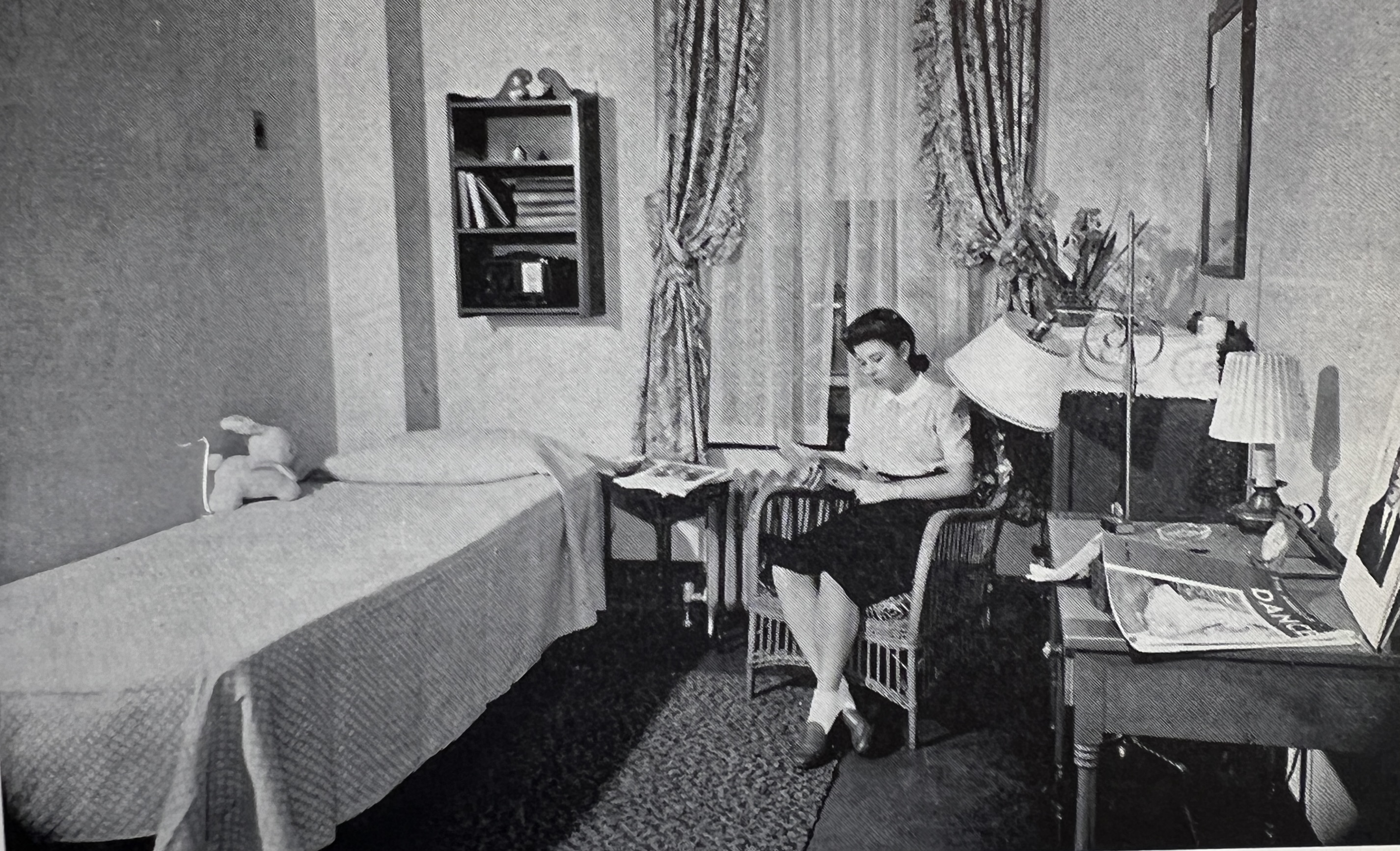
This leaves the historically valuable and original doors in a state of limbo, as they will be superfluous. Similarly, some of the older wardrobes, shelving units, and mirrors that had been mainstays in the bedrooms over all these years simply will not fit with the new units. Rather than discard these artifacts, some of them will be preserved as display items throughout the building, while many of the old doors will be installed in recesses along the corridor in their original locations.

The second and third floors are in a unique situation, as they were slightly modified after the building switched from the Three Arts Club to the Brandon Residence for Women. Most notably, the heating and cooling system was updated on these floors (though it is unclear exactly when), resulting in the installation of ductwork and ahistoric louvers directly beneath the windows. The team has decided to utilize the existing louvered openings rather than reverting to the original appearance of Three Arts, so that packaged terminal heat pump (PTHP) units by EPHOCA can be installed throughout both floors.

The heating and cooling systems on floors four through eight are a bit more complicated. The EPHOCA units will be installed in apartments that do not face West 85th Street, as these secondary facades do not have the same level of protection as the primary façade. The team can make small penetrations for the intake and exhaust vents without running afoul of preservation rules. The units that face West 85th Street will be equipped with mini-split units on a VRF system to avoid modifying the building’s primary façade. Meanwhile, all units will be on an air source heat pump system for domestic hot water and a centralized ERV system for ventilation. Storage tanks for the domestic hot water system will be located in an existing mechanical room, while air handlers, ERVs, and a limited number of condensers for the VRF system will also be housed on the roof.

Other significant changes to the building have less to do with performance and more to do with accessibility. An entry ramp will be added to the front entrance and vestibule, while a second elevator will be installed that services each floor. At present, the one elevator in the building does not go up to the penthouse floor nor is it large enough to fit a stretcher. The second elevator will be capable of doing both.

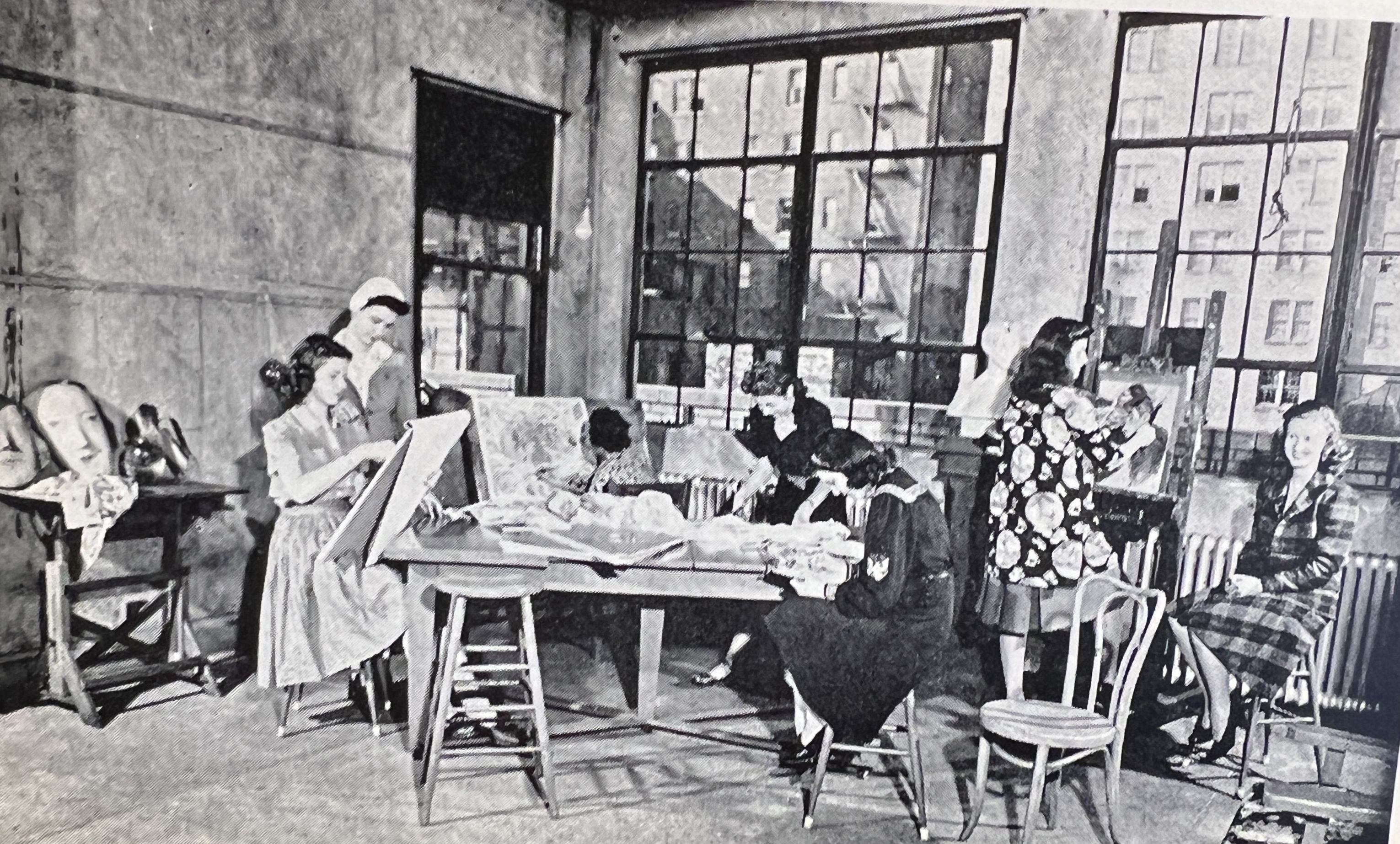
The penthouse, which has served as the superintendent’s residence for several decades (and was originally an art studio), will be converted into a community room with access to a roof terrace that offers views of the Hudson River to the west. To provide a second means of egress for the penthouse, the team will extend one of the building’s two stairwells to the roof. The bulkhead from that extension will then be connected to the penthouse by a canopy that contains photovoltaic cells, which represents an ingenious way to turn a regulatory nuisance into a benefit for the building.

Relaxing on the roof circa 1941.

As the roof does not have the same kind of regulatory restrictions as other parts of the building envelope, the team will be performing significant work to replace it. The non-terrace portion will be replaced with styrene-butadiene-styrene (SBS) roofing, while the terrace will sit atop an inverted roof membrane assembly (IRMA). The average R-value across the two systems will be R-40.

The roof, like each of the floor slabs, was built out of cinder concrete with draped mesh. Now archaic, the technique was relatively common in major urban centers like New York City from the 1920s through the 1940s, with the most well-known example being the Empire State Building. In this kind of construction, wire mesh was “draped” over steel floor beams and set in place before being encased in concrete. As Esparza explains, the mesh acts as a tensile catenary system and does the lion’s share of the work handling structural loads. It is then capped with a topping slab.

The team will replace the roof’s topping slab and re-cover it with the new roofing assembly. However, the other floor slabs will be disturbed as little as possible, as the mesh wire needs to remain fully intact to avoid undermining the load capacity of the slab. One of the unavoidable challenges throughout preplanning has been strategizing the placement of ductwork for the supply and return air for the ERVs and the lines for the VRF system so that they do not disturb the wires. After all, the building has a relatively small floorplate and the efficiency units are quite snug, so there is not a lot of flexibility or room for error. This is yet another reason the team opted to use PTHP units for the apartments that do not face West 85th Street, as they just need two small penetrations through the façade, electricity, and a condensate line.

Given the extreme complexity of the project and the need to balance preservation and performance, the ease with which these units can be installed is an enormous relief.

Overcoming the Challenges of Early Adoption

Despite its complexity, Three Arts represents a critical case study and WSFSSH’s former Director of Real Estate Development, Jenna Breines, recognizes how important the retrofit is. “We're excited that this building can be part of the historic preservation world’s efforts to embrace sustainability,” she says. However, she is quick to point out that there have been some speed bumps on the road to certification.

Most notably, Breines says that one of the most difficult issues has been finding consultants and certifiers. Even though New York is one of the leading markets for Passive House construction in North America, the expertise needed to certify a historic multifamily retrofit is lacking, and WSFSSH ultimately had to hire consultants from Vancouver. Given how many buildings need to be retrofitted in New York City, there needs to be more consultants who are based in New York. However, as a counterpoint, there needs to be more projects available so that professionals who have invested in upskilling actually have enough work to make the investment worthwhile.

In some instances, the lack of upskilling extends to building managers and superintendents. Breines notes that there is often a desire by engineers and designers to install extremely sophisticated mechanical systems, but that they need to bring in the people who are in charge of the day-to-day operations of the buildings early on to ensure they know how to keep them running and to troubleshoot when things go wrong.

Another challenge for any project of this scale and complexity is scheduling. Both Breines and Marrocco recommend building in extra time for reviews so that teams can adjust construction documents throughout design. Particularly with retrofits that include landmark protections, factoring in these kinds of cushions can help keep the team on or even ahead of schedule.

In terms of overall strategy for historic retrofits, Esparza recommends identifying the most complicated pieces of the puzzle as early as possible, recognizing limitations, and then working within those limitations. He also notes that building the right team is crucial, especially when the project is pursuing Passive House certification, historic tax credits, and is located within a landmarked district. The success he credits to his coworkers at C+GA, the folks at WSFSSH, preservation consultant Mary Kay Judy (Architectural & Cultural Heritage Conservation), and SWA.

“All of these people and groups that come with valuable experience, I think, has really benefited this project in immeasurable ways.”


Published: December 2, 2025
Author: Jay Fox