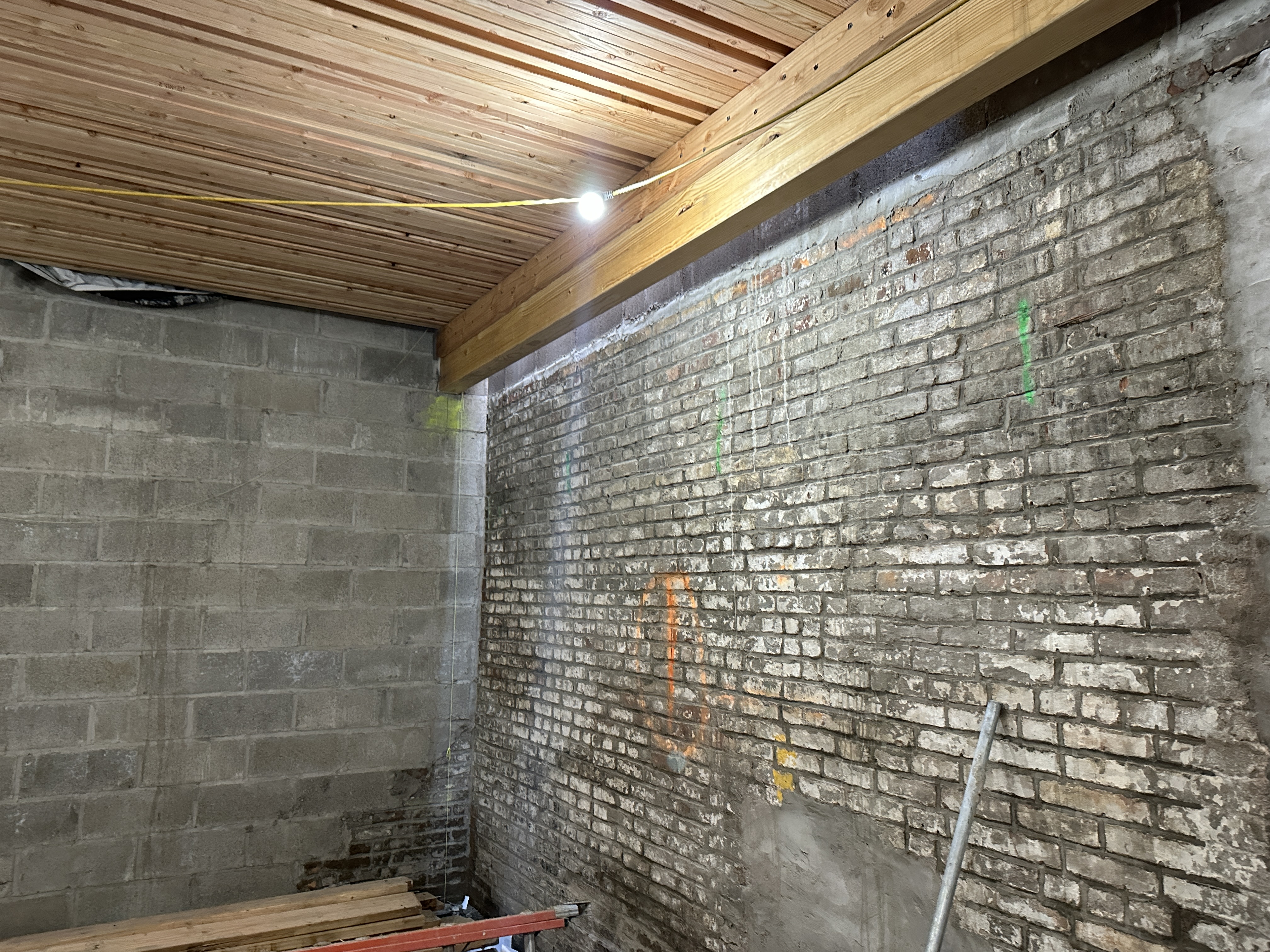
© Nicholas Venezia

The Relevance of Embodied Carbon in the Passive House World - 475 HQ Retrofit Case Study

By Mariana Moreira

The Passive House (PH) standard has emerged as a revolutionary building design approach, allowing radical reductions in operational energy use through optimized airtight envelopes, superinsulation, and heat-recovery ventilation, predictably minimizing heating and cooling demand. For decades now, the application of PH strategies in the United States and around the world has provided a rigorous, measurable path toward carbon-neutral buildings, fundamentally transforming expectations for energy performance in the built environment. As operational energy emissions in PH buildings are minimized, many PH practitioners are seeking to further reduce the total emissions of buildings by also addressing embodied carbon (EC). EC refers to the greenhouse gas emissions released throughout the life cycle of building materials, from raw material extraction to manufacturing, transport, use during construction, maintenance, and eventual disposal at end‐of‐life. Combining PH performance and EC reductions presents the building sector with an excellent opportunity to tackle climate change.

A great example of this integrated approach is the retrofit of the 475 High Performance Building Supply headquarters in Brooklyn, New York. When 475 began searching for a building for its new headquarters, the location was non-negotiable: it had to be in Brooklyn. Given the limited availability of new construction in a consolidated urban area like Brooklyn, the team’s goal from the outset was to find a building that could be retrofitted. Rather than viewing this as a constraint, 475 recognized it as an opportunity to align PH performance with EC optimization.

The design strategy prioritized retaining as much of the existing structure as possible, avoiding the significant carbon costs of demolition, disposal, and new construction. Material choices focused on locally-sourced products, low-carbon assemblies, and foam-free insulation strategies, reducing transport emissions and upfront embodied impacts.

Addressing EC can be as vital to the overall emissions of a project as those generated during the operational phase. This presents both a challenge and an opportunity for the PH community because the same rigorous systems-thinking in project delivery that PH demands—such as material selection, design strategy, and construction practices—can now also mitigate EC impacts. The goal is to find the balance where high operational efficiency and smart material selection operate in harmony, each strengthening the building's overall climate performance. In this way, PH professionals have the opportunity to dramatically cut the totality of a building’s carbon emissions throughout its entire life cycle.

Understanding Embodied Carbon

Unlike operational carbon, which accumulates gradually over decades of energy use, a significant portion of EC emissions are released before the building is completed. For this reason, it’s often described as the hidden or upfront carbon burden.

As part of EC mitigation, design teams are considering how to reduce the emissions involved in creating and installing building materials, as well as end-of-life options, such as recycling, deconstruction, and reuse. However, it is crucial to recognize that outcomes projected far beyond the near term become increasingly uncertain. Tools to estimate EC across a building’s life cycle rely on projected future scenarios. The Passive House Institute’s MEET (Manufacturing Energy Evaluation Tool), for example, typically assumes a 40-year service life. Claims related to long-term assessments should be treated with caution and framed conservatively.

To fully understand how to make a meaningful impact, it’s essential to account for material-related emissions, and the way to measure them is through a life cycle assessment (LCA). Although this article does not delve into the specifics of LCAs, there are four main categories in the life-cycle emissions important to understand, as shown in Figure 1. (Collectively, the first two correspond to the upfront carbon, which is the carbon emitted before the building is ready for use.)

  1. Cradle-to-gate, also known as the product stage (A1-A3), which involves the extraction of raw materials and manufacture of products.

  2. The construction phase (A4-A5), which involves transporting the product to the site and the construction of the building.

  3. The use and maintenance phase (B1-B7), during which the building operates and undergoes repairs and maintenance, generating EC and operational emissions.

  4. The end-of-life phase (C1-C4), which includes demolition and waste disposal.

Figure 1. An illustration of the life cycle of a building material from its raw state to the end of its life. Source: CLF - Carbon Leadership Forum

Globally, building materials account for 11% of greenhouse gas emissions, and recent studies show that EC can represent 50% or more of total life-cycle emissions in many net-zero projects.1 As the operational side becomes increasingly efficient, the proportion of emissions embodied in materials such as concrete, steel, and insulation grows ever more significant. Therefore, recognizing EC as an issue to be addressed alongside operational carbon from the outset of a sustainable project is increasingly important. This challenge also opens new opportunities for innovation through the use of natural materials that store more carbon than they emit during production, such as timber, hempcrete, or straw. Addressing EC emissions requires a holistic life cycle perspective, incorporating operational carbon, and maintaining the rigorous framework of the PH standard.

The Villains: Concrete and Insulation

Within the EC conversation, certain materials consistently emerge as the major contributors to emissions. Among them are concrete and insulation (see Figure 2). Though both are indispensable to modern construction, their carbon footprints can be significant if not carefully specified and sourced.

Figure 2. Despite relying on different material choices and building practices, a study by Builders for Climate Action found that concrete and insulation typically produce more than 50% of a building's emissions. Source: Builders for Climate Action

Concrete

The most widely used construction material in the world owes its strength and versatility to Portland cement, a binder produced through a highly energy-intensive process that releases CO₂ from the combustion of fossil fuels and from the chemical transformation of limestone. Each ton of cement emits roughly a ton of CO₂.2 While advances such as supplementary cementitious materials (SCMs), alternative binders, and carbon-cured concrete are promising, the scale of global concrete use makes it a major contributor to EC, and low-carbon options are not always locally available.

Figure 3. A visualization of the carbon impacts of different types of insulation. Source: Zero Energy Project

Insulation

On the insulation side, a more subtle challenge is presented. In the PH world, achieving ultra-low operational loads requires continuous, often thick, layers of insulation. However, many conventional products, such as extruded polystyrene (XPS) or spray foams, carry a heavy embodied burden due to petrochemical raw components and blowing agents with high global warming potential (GWP). Using these materials in the insulating process to reduce operational carbon emissions can increase EC emissions. Conversely, natural materials like wool, dense pack cellulose, cork, hempcrete, and straw bale can be used as insulation without contributing to EC emissions (see Figure 3), but they provide less thermal resistance than foams made from petrochemicals.

Wrestling with these tradeoffs is at the core of the EC dilemma: how to optimize energy efficiency through material responsibility from the earliest design stages, while mitigating the carbon embodied in those materials. As technologies evolve, the goal must expand beyond energy performance. The materials chosen to help conserve energy must also be analyzed for their own carbon impacts, ensuring that the pursuit of operational excellence doesn’t unnecessarily harm the environment.

Passive House Standards and Embodied Carbon

The PH standard highlights the benefits of optimized envelope performance: minimal heat loss, minimal thermal bridging, high airtightness, and ventilation with heat recovery. That success has drastically cut operational loads and is globally recognized for delivering buildings that use less heating energy. In general, a building that meets PH standards reduces heating energy demand by over 75% when compared to conventional lower energy new builds, as illustrated in Figure 4.3

Figure 4. A visualization of the heating energy savings of a Passive House building. Source: Passipedia

Traditionally, the most significant and reliable way to reduce carbon emissions has been to address operational carbon, specifically heating. That’s where PH excels. Now, with PH optimized envelopes and systems, more efficient equipment, and electricity grids undergoing decarbonization, the growth of EC emissions over the total life cycle of buildings becomes much more pronounced. Therefore, integrating EC considerations into PH building practices makes them more effective, only broadening the efficiency for which PH is known.

By utilizing this integrated approach, PH becomes an even more powerful framework for decarbonization. The same science-based standards used to transform envelope performance can now be applied to the material flows that support it. Instead of parallel efforts, operational and embodied carbon became complementary strategies united toward the same goal: the lowest possible climate impact over the building’s life.

Most Common Materials – Drilled, Mined, Grown

At the most fundamental level, every building material can be traced back to one of three origins: drilled, mined, or grown.

  • Drilled materials: petrochemical-based plastics, foams, and sealants. Materials derived from fossil fuels and non-renewable sources can be costly to extract and have very limited recyclability.

  • Mined materials: metals, glass, aggregates, and minerals. Materials extracted from nature and refined also demand significant amounts of energy to extract but are easier to recycle or reuse when compared to drilled materials.

  • Grown materials: timber, straw, hemp, bamboo. These biogenic materials do not require large amounts of energy to harvest or process. Moreover, they are known as carbon-sequestering products because photosynthesis captures atmospheric carbon during their growth phase.

All three categories start with raw materials and undergo a manufacturing process to produce finished products. The emissions associated with developing these products depend on the source and manufacturing processes these materials undergo. Understanding these categories helps designers strategically select materials based on their carbon impact.

The shift toward biogenic materials is not part of an aesthetic or ethical choice; it’s a climate action decision. Biogenic materials incorporate nature’s carbon cycle rather than fighting against it.

Carbon-Storing Buildings: Toward Carbon Negativity

It has been established that the building sector is a significant carbon emitter. For that reason, the idea of carbon-storing architecture can shift the narrative. When the design process prioritizes long-term building durability and the use of natural materials, the concept of creating carbon-negative buildings becomes feasible.

Materials such as wood-based products, straw, hemp, and other biogenic materials can effectively serve as temporary carbon storage, holding carbon for decades and possibly centuries. Here lies the real mindset shift: recognizing that the largest embodied impacts often come from cement, steel, and foam insulation, and ensuring the inclusion of smarter assemblies with natural, grown materials from the initial design phase.

An illustration of this shift implemented in practice is the 475 headquarters retrofit. By keeping part of the existing masonry structure, concrete slab, and foundation, the project avoided the EC that new construction and the process of demolition would have, resulting in a simple yet highly impactful form of carbon conservation. Where new materials were required, timber systems like nail-laminated timber (NLT) slabs and glulam beams were used, effectively substituting high-carbon materials with biogenic alternatives that store carbon while providing comparable structural performance. Although the project does not claim to be carbon negative, it demonstrates how combining building reuse with strategic material selection can significantly reduce embodied emissions and move projects closer to carbon-storing outcomes.

It is possible to do more with less, a principle that aligns with PH design, and improving the pathway to carbon reduction does not need to be an abrupt change. According to a report published by the Builders for Climate Action in 2022, only a 5% reduction in EC emissions each year could achieve a 40% reduction by 2030.4 As shown in Figure 5, the same report suggests a material substitution process, from a standard code-compliant building, with high material carbon emissions (MCI), to a category called “best available materials” (readily available materials), and “best possible materials” (best option for carbon emissions, not always widely available, but still very possible).

Figure 5. Reductions in material carbon emissions through materials substitutions. Source: Materials Emission Benchmark Study for Part 9 Homes - 2022

The easiest and most sustainable way to reduce carbon emissions is to take small steps over time, simply by considering the strategies already in use and making better material choices. Making better decisions with what’s available right now is the key to achieving carbon neutrality by 2050.

Figure 6. An illustration of how lowering EC and OC can reduce total emissions. Source: Chris Magwood

Balancing Operational and Embodied Carbon

As has been noted, the balance between operational and embodied carbon is dynamic (see Figure 6). While operational carbon accumulates over the life of the building, most of the EC is emitted up front. Nowadays, there are many initiatives for grid decarbonization, and as progress continues, alongside sustainable design strategies such as those exemplified by the PH standard, it is clear that operational emissions are being reduced significantly.

Another critical aspect of the balance between operational and embodied carbon is the building's form. Material efficiency is directly linked to form and geometry. The EC discussion should not focus solely on materials but also on a building's form and design. It’s evident that a compact building with simple detailing and efficient structure can require fewer materials. In the PH world, compact, simplified buildings are strongly recommended for energy reasons, and the same strategy can be used to reduce embodied emissions.

Every design decision that aligns form, envelope performance, and material efficiency can influence EC outcomes.

When starting a project, project teams need to clarify the main goal: is the design being developed with energy efficiency as the final goal, or, when designing an energy-efficient building, is the goal also to minimize its climate impact? For many PH practitioners, this is becoming a conscious transition. The goal drives material choice, design decisions, and strategies, and yes, both goals are possible. PH practitioners are leading the way to achieve both: low operational demand and low EC, but it requires holistic integration from the start.

Life Cycle Thinking

To start thinking about the life cycle of a product, it’s crucial to fully understand the climate impact of the future building being designed. The EC life cycle is larger even than extraction, manufacturing, construction, operation, maintenance, reuse, and end-of-life. Most importantly, life-cycle thinking is an understanding that each stage presents a massive opportunity for reduction. Design teams should start with phases that are possible to control and anticipate, such as sourcing materials from local producers to minimize transport distances, designing with climate impact in mind, and accounting for longevity. With the best available tools and data, it’s possible to assume and estimate end-of-life scenarios.

Tools like LCA and databases like Embodied Carbon in Construction Calculator (EC3) enable designers to quantify climate impacts early in the design process, helping inform specifications aligned with a project's climate goals. While LCA provides a method to quantify EC, it also evaluates environmental impacts across life-cycle stages, from raw material extraction to reuse or disposal at the end of life, allowing designers to compare materials, assemblies, and structural systems based on their climate impact. Even with uncertainties in assuming some stages, especially at the end-of-life, LCA remains one of the most reliable frameworks available for making EC decisions transparent and justifiable.

When it comes to EC calculations, EC3 is one of the most widely used tools. Developed by Building Transparency, it combines data to enable product comparisons of building materials, making it possible for designers to trace their low-carbon strategies, even though it does not model energy performance or operational carbon. On the other hand, tools such as Tally and OneClick LCA provide designers with essential insights to quantify EC across structural systems, envelopes, and finishes, enabling them to test scenarios involving material substitutions, service-life assumptions, and end-of-life pathways.

There is also an important tool called BEAM Estimator, developed by Builders for Climate Action. It provides an estimate of EC emissions in the early design phase. The tool is developed for low-rise and residential construction. Designed as an intuitive tool, it allows practitioners to quickly assess the carbon implications of structures and envelope assemblies, as well as the impact of making material substitutions when necessary—even before detailed specifications are complete.

Currently in beta testing, PHI’s MEET toolset is designed to integrate EC accounting with energy modeling. It focuses on two specific points: the global warming potential of greenhouse gas emissions and the primary energy required to produce building materials and to operate the building. It estimates embodied emissions assuming a 40-year service life for the building, and it aims to connect operational energy modeling, typically handled by PHPP, with EC accounting. This integration reflects a natural and expected evolution of PH practice toward total climate impact optimization.

With this in mind, combining energy and carbon modeling into a unified design tool is promising. PH has already demonstrated how a rigorous standard can transform building energy use;  applying the same discipline to EC, using transparent assumptions, conservative claims, and measurable outcomes, has the potential to reduce the building sector’s overall climate impact dramatically. In this scenario, PHPP continues to optimize operational energy and comfort, while LCA and EC3 tools quantify material impacts and life-cycle emissions, and MEET’s development is promising in bridging the gap between energy and carbon accounting. Rather than introducing competing priorities, the available tools present an integrated approach that reinforces the importance of a life-cycle thinking focused on long-term climate goals.

Don't Go It Alone. Join Our Community.

The Reimagine Buildings Collective brings together building professionals stepping up to tackle climate change.

Implementing Embodied Carbon Reduction Strategies in Passive House Projects

Incorporating EC into PH is a natural evolution. By applying the same performance-based thinking that transformed operational energy use, PH practitioners are uniquely positioned to lead the transition toward an era of buildings that positively impact the environment with simple and effective steps:

  • Define the climate goal early in the design process, preferably targeting reductions in both embodied and operational carbon.

  • Optimize the building’s form before selecting materials. Form simultaneously drives operational energy demand, envelope area, and total material quantities, which, in turn, determine the EC associated with those materials.

  • Using PHPP, meet the PH demand targets while maintaining the performance outcomes. With PHPP, teams can compare the performance impacts of different assemblies. High-performance assemblies help reduce operational carbon, but they do not necessarily mean lower EC emissions. That is where material choice matters.

  • Quantify EC with a whole building LCA, focusing on the cradle-to-gate stage, and using conservative assumptions for future end-of-life scenarios. This way, it is possible to compare materials and assemblies and to make educated decisions.

  • Using tools like EC3 and BEAM, compare and select the best materials, prioritizing low-EC materials and considering local material suppliers. Note that making minor material substitutions in insulation and systems traditionally reserved for concrete and steel can provide significant carbon reductions with minimal design changes.

  • Prioritize grown materials, such as wood, cellulose, wood fiber, hemp, and straw, as these materials have low carbon emissions and a considerable carbon-storing potential. Walk away from petrochemical materials like foam and carbon-intensive finishes.

  • Design for durability and adaptability, with a long service life in mind. The building's end-of-life is uncertain, but designing with total lifespan and reuse in mind reduces total life-cycle emissions.

  • Explore available tools for integrating energy and carbon modeling, such as PHPP with MEET.*

Case Study: 475 High Performance Building Supply HQ

Honoring the proud slogan "Build like the future depends on it," 475’s headquarters in Brooklyn is a compelling real-world example of combining the high performance of PH and low EC materials. The project is a renovation of a 1920s building primarily constructed of brick and CMU with a concrete slab foundation into a Passive House-certified office. Before construction, the existing building was a garage that could accommodate up to five cars, with a duplex apartment unit above the front section facing the street (see Figure 7).

Figure 7. An illustration of the original structure and the expansion. Courtesy of 475

The project, led by 475 CEO Floris Keverling Buisman and architect Ryan Enschede of  Ryan Enschede Studio, intended to preserve as much of the existing building as possible, especially the facade, masonry walls, concrete floor, and foundation, avoiding carbon emissions from demolition and disposal. The project team wanted to ensure the retrofit would meet all PH standards, while remaining foam-free and using low-carbon materials. To achieve those objectives, some parts of the original structure had to be reinforced, and helical steel piers were chosen to reduce the amount of concrete used.

NLT was used for the upper-floor slabs between spaced glulam beams. Both elements were sourced from local suppliers in New York State. The NLT was left exposed, and, together with the maple plywood staircase, create a warm and comfortable interior, highlighting the beauty of the wood while eliminating the use of high-carbon materials in the finishes.

Courtesy of 475  © Nicholas Venezia
Courtesy of 475 © Nicholas Venezia

The concrete floor was preserved, as were parts of the exterior and party walls, both very well weather-treated and insulated with the best high-performance materials available on the market, all supplied by 475. Heat recovery ventilation and high-performance windows and skylights were also key features to the retrofit and supplied by 475. A rooftop 8 kWh solar array was installed, and although it is not included in the EC emissions calculation, it has a significant impact on operational emissions, as it can generate more energy than the building requires to operate.

The 475 team used the BEAM Estimator to calculate the carbon emissions of the materials. As seen in Figure 8, the results show a net material carbon emissions (MCE) of 60,099 kg CO₂e, indicating a notably low value for a project of this scale and performance ambition. This reflects the decisive carbon advantage of reusing existing conditions, paired with a high-performance envelope strategy. It is important to highlight that this result represents only the incremental EC added by the retrofit, not a complete building replacement. It is evident that keeping the existing structure and foundation remains one of the most effective strategies available.

Figure 8. The material carbon results for 475's new headquarters. Courtesy of 475

As expected, the material breakdown reveals the CMU and concrete walls as the major EC contributors. Together, these two items account for almost 83% of the project's total embodied emissions (see Figure 9), emphasizing a well-known reality: even in low-carbon projects, cement-based materials still dominate EC emissions.

Figure 9. The BEAM report showing the total embodied emissions and how much the CMU and concrete walls contributed to the overall EC of the project. Courtesy of 475

In a comparison of traditional assemblies and smart material selection for the same retrofit project, the importance of material choice for EC emissions is clear, even in a high-performance, reuse-oriented project. The smart material selection strategy results in 60,099 kg CO₂e, compared to 144,927 kg CO₂e for the traditional assemblies (see Figure 10). This represents a reduction of approximately 58% in EC, achieved primarily through material choices and minimized concrete use. The most significant differences occur in the foundations and primary structure, with 1,599 kg CO₂e for the NLT and 617 kg CO₂e for the glulam, compared to  24,014 kg CO₂e for concrete and 4,985 kg CO₂e for steel. The results do not account for carbon storage in natural materials, but only for avoided emissions. This comparison demonstrates how reusing existing foundations where possible and replacing steel with mass timber significantly reduces EC while maintaining structural performance.

Figure 10. A comparison of smart material selection vs. traditional materials. Courtesy of 475
Figure 11. A comparison between EC emissions for smart materials (blue) and traditional materials (red). Courtesy of 475

The insulation choices also display another major contributor to EC emissions, reinforcing a critical lesson for PH and low-carbon retrofit practices. Material choice can matter as much as energy performance, and the use of timber and mineral-based insulation delivers immediate, scalable carbon savings, as shown in Figure 11.

Moreover, one of the most effective EC strategies is avoiding unnecessary demolition and concrete replacement.

With a holistic approach, strategic material selection, and airtight design, the project achieved PH certification. 475 illustrated that PH and low EC design are not opposite or competing goals; they are complementary strategies toward true climate-resilient architecture. Furthermore, these strategies are not future improvements; achieving significant reductions is possible today, using readily available materials and well-known construction methods.

The 475 headquarters project also received formal recognition for this integrated approach by winning a 2026 AIA New York Design Award, cited specifically for its exemplary integration of embodied and operational sustainability. Notably, most of the projects recognized alongside 475’s new headquarters were mass timber buildings, reflecting a growing awareness within the architectural field that material choice and its capacity to store carbon have become essential to climate-responsive design.

Courtesy of 475  © Nicholas Venezia
Courtesy of 475 © Nicholas Venezia

Conclusion

The PH standard has shifted aspirations for building performance by proving that operational energy reductions are attainable, measurable, and long-lasting. As buildings approach low operational demand, EC emissions should now be considered with the same rigor, transparency, and systems thinking that define PH practices. EC mitigation is not in conflict with PH principles, but a natural and necessary extension of them. Envelope optimization, airtightness, compact form, and durability-driven design already reduce material quantities. When paired with thoughtful material selection, structural reuse, and life-cycle thinking, these same strategies can seriously reduce upfront emissions while preserving long-term operational performance. The 475 headquarters retrofit illustrates this argument in practice and demonstrates how the building sector, by utilizing EC strategies with PH standards, can arguably provide the strongest climate-responsive architecture.

* The AECB in the UK has also developed the PHribbon, which allow direct carbon emissions accounting integration with the PHPP. The Passive House Network with the AECB initiated an effort to apply the PHribbon to the American market. Unfortunately, the complications of translating the tool to the needs of US practitioners proved a barrier, and the tool was regrettably withdrawn from the US. However, it continues to be successfully utilized in the UK.

Top photo courtesy of 475  © Nicholas Venezia

REFERENCES

1) World Green Building Council - Bringing Embodied Carbon Upfront. Accessed January 22, 2026. https://worldgbc.org/climate-action/embodied-carbon/

2) UNEP - United Nations Environment Programme - Greening Cement Production has a Big Role to Play in Reducing Greenhouse Gas Emissions. Published on May 18, 2010. Accessed on January 22, 2026. https://www.unep.org/resources/report/greening-cement-production-has-big-role-play-reducing-greenhouse-gas-emissions?

3) Passipedia - What Is a Passive House? Last modified on September 25, 2022. Accessed on January 22, 2026. https://passipedia.org/basics/what_is_a_passive_house

4) Magwood, C. and Trottier, M. Material Emissions Benchmark Report for Part 9 Homes in Vancouver. Builders for Climate Action (2022). Accessed January 22, 2026. https://clfbritishcolumbia.com/wp-content/uploads/2024/01/vancouver_part_9_material_emissions_benchmark_report-2.pdf


Published: January 23, 2026
Author: Mariana Moreira