gladstone village ottawa west view

New Development in Ottawa Aims to Build a Village

By Jay Fox

It is not news that we need more housing in North America. While the focus is often on the dearth of affordable options, there are also limits in the supply of homes for larger families and individuals with mobility impairments. Moreover, new developments are frequently built far from urban centers and can feel isolated rather than connected to the civic and social infrastructure of a community.

With Gladstone Village, a multi-phase project under construction in Ottawa’s Little Italy neighborhood, Ottawa Community Housing (OCH) is showing that affordable housing can rise to the challenge of addressing all these issues, and at scale. The first phase of Gladstone Village consists of a U-shaped podium topped by two towers—one reaching 18 stories, the other nine—and contains a mix of unit types that ranges from studios to four-bedroom apartments. It will contain a total of 336 units.

Begun in 2021 and with occupancy expected in 2027, the project was designed by the Toronto-based Diamond Schmitt Architects, with RDH Building Science serving as both the building envelope engineer and the Passive House and energy modeling consultant. Meeting stringent Passive House parameters is certainly vital to the project’s goals, but the team has contextualized improved building performance in a way so that it is not just about efficiency or resiliency. Rather, it fits within a larger effort to build housing that responds to quality-of-life issues for residents who have been priced out of the market. As Diamond Schmitt Project Architect Arne Suraga explains, the team wants to create affordable units that are also resilient, comfortable, and designed to create a shared sense of space and community.

gladstone village ottawa exterior 2

Project Overview

  • Units: 336

  • Height: 18 stories (Tower 1), 9 stories (Tower 2), 3-story podium

  • Unit Mix: 59 studios, 182 one-bedrooms, 57 two-bedrooms, 35 three-bedrooms, 3 four-bedrooms

  • Accessibility: 20% of all unit types

  • On-site Solar: 200,000 kWh/year (target)

  • Occupancy: 2027

Designing for Families

While much of the conversation around affordable housing in North America centers on maximizing the number of units within a development, Gladstone Village also addresses a critical gap in the market: family-sized housing. Of the 336 units, 182 are one-bedrooms and 59 are studios, but the project also includes 57 two-bedroom units, 35 three-bedroom units, and three four-bedroom apartments. The numbers taper toward the larger end, but the supply of three- and four-bedroom units at below-market rents is exceptionally rare.

Twenty percent of the units across every size category are designed to meet accessibility standards that exceed the Ontario building code. This means that a multigenerational family living in a four-bedroom apartment can have a fully accessible washroom and barrier-free circulation throughout. As Suraga explains, the accessibility requirements are mandated from above, but the design team has embraced them to ensure that the building genuinely accommodates aging in place, supportive housing, and the multifaceted needs of the people who will call Gladstone Village home.

The unit mix reflects OCH’s effort to calibrate supply to demand. As the second-largest public housing provider in Ontario and one of the three largest in Canada, OCH draws from a constantly expanding pool of applicants. The mix of unit sizes is intended to reflect the patterns they observe within that applicant pool, balancing the cost of construction against the housing types that are most urgently needed. Families have been squeezed by a market that favors smaller, more expensive units because they generate higher returns for developers. Gladstone Village pushes back against that logic.

gladstone viilage diamond schmitt construction 2048x1233

Project Team

Massing for Comfort and Efficiency

Gladstone Village sits on a site that was once home to a factory in a historically Italian enclave on the western edge of downtown Ottawa characterized by early 20th-century homes and brick commercial buildings. By the time the design team arrived, the history of the site had largely been cleared, rezoned, and reimagined within Gladstone Village’s master plan, which will spread across eight acres just blocks from Downtown Ottawa.

The original plan called for a small block of townhouses on the site. Suraga and the team argued that reabsorbing those townhouses into the main building would produce a net benefit in units, improve performance by reducing surface area, and—perhaps most importantly—spare residents from having to walk outside in Ottawa’s punishing winters to access common amenities like laundry rooms. OCH agreed.

Suraga notes that the original design also included a sawtooth massing along an angled property line that runs beside a multi-use pathway and a light rail transit (LRT) line. While the sawtooth created desirable corner-unit conditions, the design team convinced OCH to reduce the number of sawtooth elements by half. The simplification lowered the ratio of envelope area to treated floor area, which improved the building’s energy performance without sacrificing the architectural character of the development.

A diagram of Gladstone Village. All figures and design details courtesy of Diamond Schmitt Architects

Connected by Transit, Designed for Community

One of the most compelling aspects of the Gladstone Village master plan is the multimodal transit infrastructure being built around it. The Corso Italia LRT station, part of a relatively new LRT network that Ottawa has been expanding over the past several years, finished construction just months ago and sits at the southwest corner of the site. A major highway provides connectivity for drivers, while the adjacent multi-use pathway extends toward downtown Ottawa’s bicycle network. A future active transit corridor—essentially a dedicated bike and pedestrian pathway—with considerations for a new bridge over the LRT line in the future.

Within the building itself, the design team has worked with OC Transpo, Ottawa’s transit authority, to accommodate the agency’s accessible transit vehicles in the courtyard. These vehicles, which serve people with mobility needs by appointment, will be able to pull directly up to the building’s front door. From a design perspective, it is a relatively minor detail, but it has enormous practical weight for residents who rely on assisted transportation.

The building’s amenity program reflects a philosophy that rejects the austerity and starkness commonly found in affordable housing. On the ground floor, residents will find a generous lobby lounge designed as a gathering space rather than a mere waiting area, bookable study rooms for students or remote workers who need a quiet workspace, a pet wash station, and a bookable event space. Adjacent to the ground floor amenities is an exterior space with a playground, seating areas, and plantings.

On the fourth floor, a large multipurpose room with a divider wall, kitchenette, and rooftop patio serves double duty: one side can host community events or birthday parties, while the other can be configured as a presentation space with a large screen for movie nights. The patio canopy pulls double duty as well, as it shades the terrace and supports a portion of the building’s photovoltaic array. A fitness and wellness space on the same floor faces the outdoor amenity area, filling the room with daylight.

On the eighth floor, an arts and crafts room provides a rougher, more resilient space. By providing this “third space,” an area that exists outside of the workplace or the home, residents can take up new hobbies and interests without needing to pay for studio space. Residents can learn to play an instrument, paint, or experiment with other creative mediums without worrying about making a mess or disturbing their family.

Suraga notes that these kinds of spaces are especially rare for people who cannot afford market rent, which can have a chilling effect on creativity. “If somebody is not able to try things out, then they may never actually attempt them,” Suraga says.

The building even includes a bicycle repair space on the ground floor, positioned with large windows facing the new multi-use pathway. The team imagines families tuning up their bikes on the first warm Saturday of spring before heading out along the green corridor. It is an amenity that goes beyond storage; it encourages an active lifestyle and connects the building to the transit infrastructure at its doorstep.

Look Inside
Figure 1. Click on the image to see additional details.

A Basket Weave at Eighteen Stories

The envelope of Gladstone Village reflects the design team’s effort to balance performance, aesthetics, and the practical realities of high-rise construction in Ontario. The three-story podium is clad in masonry to connect aesthetically to the brick buildings of the surrounding neighborhood and includes thermally broken brick ties, thermally broken shelf angles, and continuous insulation around parapets that transition down to the below-grade foundations (see Figure 1). The aluminum satisfies Ontario’s non-combustible cladding requirements for high-rise construction while keeping structural loads low and maintenance manageable over the long term.

Throughout the building, the design team has maintained eight inches of continuous insulation in the above-grade assemblies. Triple-glazed fiberglass windows from Cascadia Windows & Doors are used across the board, with operable units in every apartment equipped with limiters for safety. The window-to-wall ratio is held at 30%, and the team worked with Cascadia Windows & Doors and RDH to maximize the size of individual windows while minimizing mullions, which would otherwise degrade thermal performance. Where glazing is unnecessary—in maintenance spaces, back-of-house areas—the team detailed the facade to maintain the building’s distinctive basket-weave pattern using fully insulated opaque wall panels with reflective metal finishes that mimic windows from a distance.

Look Inside
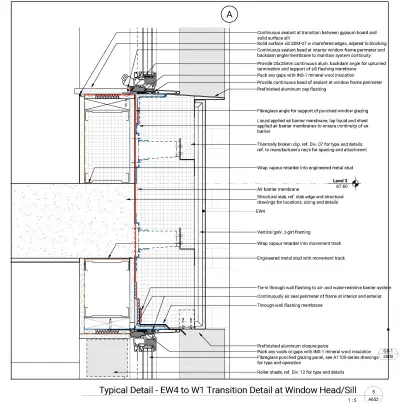
Figure 2. The window detailing is very complex. Click on the figure to explore the detailing in greater depth.

Throughout the building, the design team has maintained eight inches of continuous insulation in the above-grade assemblies. Triple-glazed fiberglass windows from Cascadia Windows & Doors are used across the board (see Figure 2), with operable units in every apartment equipped with limiters for safety. The window-to-wall ratio is held at 30%, and the team worked with Cascadia Windows & Doors and RDH to maximize the size of individual windows while minimizing mullions, which would otherwise degrade thermal performance. Where glazing is unnecessary—in maintenance spaces, back-of-house areas—the team detailed the facade to maintain the building’s distinctive basket-weave pattern using fully insulated opaque wall panels with reflective metal finishes that mimic windows from a distance.

Suraga notes that the U-shaped building configuration provides an unexpected benefit for managing solar heat gain: the two towers partially shade one another, reducing the need for external solar shading devices that would add structural load and introduce additional thermal bridges. Where additional solar control is necessary, the team has opted for advanced low-e coatings on the glazing, calibrated by facade orientation, rather than mechanical shading systems.

The project includes a below-grade parking level that extends past the footprint of the building and all the way to the property line of the first phase. OCH’s long-term vision is to connect this lot to the lots of successive phases in a unified underground system, limiting vehicle entry points across the entire development. For the Passive House envelope, this arrangement produces a notable benefit: because the parking structure surrounds the below-grade portions of the building and the underside of the Passive House envelope, the foundation walls are not in direct contact with soil. The parking level can function as an air buffer, reducing heat loss through the foundation and allowing the team to use a six-inch insulated soffit beneath the building rather than the eight inches used above grade.

Columns that descend from the building into the parking structure are insulated approximately four feet down from the underside of the structure to mitigate thermal bridging without introducing expensive structural thermal breaks. “It’s kind of a balance between trying to be economical but still maintaining a thermal bridge free design,” Suraga says.

The R-50 roofs are equipped with photovoltaic arrays on a cool roof assembly (see Figure 1), with amenity spaces occupying the remaining area. OCH’s in-house sustainability lead, Dan DiCaire, established a mandate of 200,000 kilowatt-hours per year of on-site solar generation. Engineered calculations from the photovoltaic supplier have confirmed that the rooftop array will meet this target—a validation of the early-stage modeling the design team conducted in-house. Excess generation will be fed back to the grid.

Centralized Systems, Resident Control

The mechanical strategy for Gladstone Village reflects both energy performance goals and the operational realities of managing a large affordable housing development. Individual apartments are served by fan coil units connected to a centralized ERV system for supply and return air, rather than individual ERVs in each unit. The centralized approach improves energy modeling outcomes and, critically, allows OCH to maintain and replace filters in a single mechanical room without entering individual apartments—a priority for both the housing provider and its residents.

“If we can minimize the number of times we have to go into people’s units, that’s always better,” Suraga says. Even the individual fan coil units have been positioned so that all maintenance access points are on the living room side, ensuring that no one ever needs to enter a resident’s bedroom to service equipment.

The domestic hot water system uses electric boilers, with a Sharc Piranha wastewater heat recovery system pre-heating incoming water by recapturing heat from the building’s drain lines. Though still somewhat rare in North American Passive House projects, wastewater heat recovery has a lot of advantages. By extracting thermal energy that would otherwise be lost to the sewer, these systems can redirect it toward reducing the energy required to heat domestic hot water, one of the largest remaining energy loads in high-performance buildings. The wastewater heat recovery system is housed in the below-grade mechanical space alongside the electrical room, where the parking structure’s buffer zone provides a thermally moderated environment for the equipment.

Planning for Ice Storms

Resilience is not an abstract concern in Ottawa. Unlike cities in the Pacific Northwest, where the conversation around resilience often centers on extreme heat and wildfire smoke, Ottawa faces a different but equally dangerous threat: ice storms. These events are characterized by heavy rain followed by a dramatic drop in temperature—sometimes ten or fifteen degrees in a matter of hours—and fierce winds that flash-freeze everything and snap power lines and tree branches under the weight of accumulated ice. While Toronto has experienced only two such storms in the last four decades, Ottawa and Montreal face them roughly every five years. The most recent significant ice storm, which struck in 2023, knocked out power in some Ottawa neighborhoods for two to three consecutive days.

In the event of a prolonged power outage, Gladstone Village’s more robust building envelope and high-performance windows will allow residents to remain in their units far longer than occupants of code-minimum buildings. Even without active heating measures and when facing sub-zero outdoor conditions, passive buildings can maintain comfortable internal temperatures for days if not weeks. The design team has also placed the large multipurpose room and several smaller amenity spaces on emergency power and emergency heat to be provided by the PV array. In addition to providing refuge for more vulnerable residents, the rooms can also give residents a place to charge their phones so they can stay in touch with family members.

“We wanted to make sure that people are still able to be connected to their loved ones or, if they have a health issue, that they’re able to still make a doctor’s appointment. Being connected is central,” Suraga says.

Don't Go It Alone. Join Our Community.

The Reimagine Buildings Collective brings together building professionals stepping up to tackle climate change.

Beginning and Ending with Teamwork

Suraga says that a lot of well-respected firms were in the running for this project. After all, Gladstone Village is more than just a new affordable building; it will become the cornerstone of an entire neighborhood within Ottawa.

“We definitely had to sharpen our pencils and show off in terms of design in affordable housing,” he says.

What ultimately gave Diamond Schmitt the advantage was their commitment to people-first design, but also their familiarity with Passive House standards. Suraga notes that the firm decided to invest in Passive House training beginning in 2016 and that, by now, many designers are well-versed in designing buildings to meet Phius and Passive House Institute standards. Given that OCH prefers design teams with greater fluency in Passive House design, and that more experience improves a team’s chances of being awarded the contract, the decision was prescient. If other housing providers follow suit, as seems likely, the decision will pay major dividends.

Suraga also notes that OCH’s prior experience with Passive House projects meant that the design team did not need to justify every detail or upfront premium associated with building to a higher standard. This has allowed the design and construction teams to collaborate openly and to focus on constructability—like how to install a membrane or a window 18 stories up.

While large-scale Passive House construction can sound daunting, Suraga offers a straightforward message: Passive House does not require exotic systems or unfamiliar materials. The membranes, insulation, and air barriers are products that would appear in a conventionally built structure. What changes is the rigor with which they are detailed, installed, and tested.

Of course, not every member of the construction team arrives fluent in Passive House techniques, so Suraga recommends not just a few training sessions, but consistently ensuring everyone is on the same page. One of the concrete steps taken to familiarize the team with the rigor of Passive House construction was to perform mockups on site. Once completed, the mockups have remained on site as permanent reference points for new workers, eliminating the risk of knowledge loss when crews rotate.

“Continuous education and communication—I think that’s where we’ve been really successful,” Suraga says.


Learn More About Passive House Buildings in Canada

Published: May 15, 2027
Author: Jay Fox
Categories: Article, Multifamily