messinger 061325 hanohomes 0o1a6950 1080x675

Scaling Deep Energy Retrofits in Boston

By Jay Fox

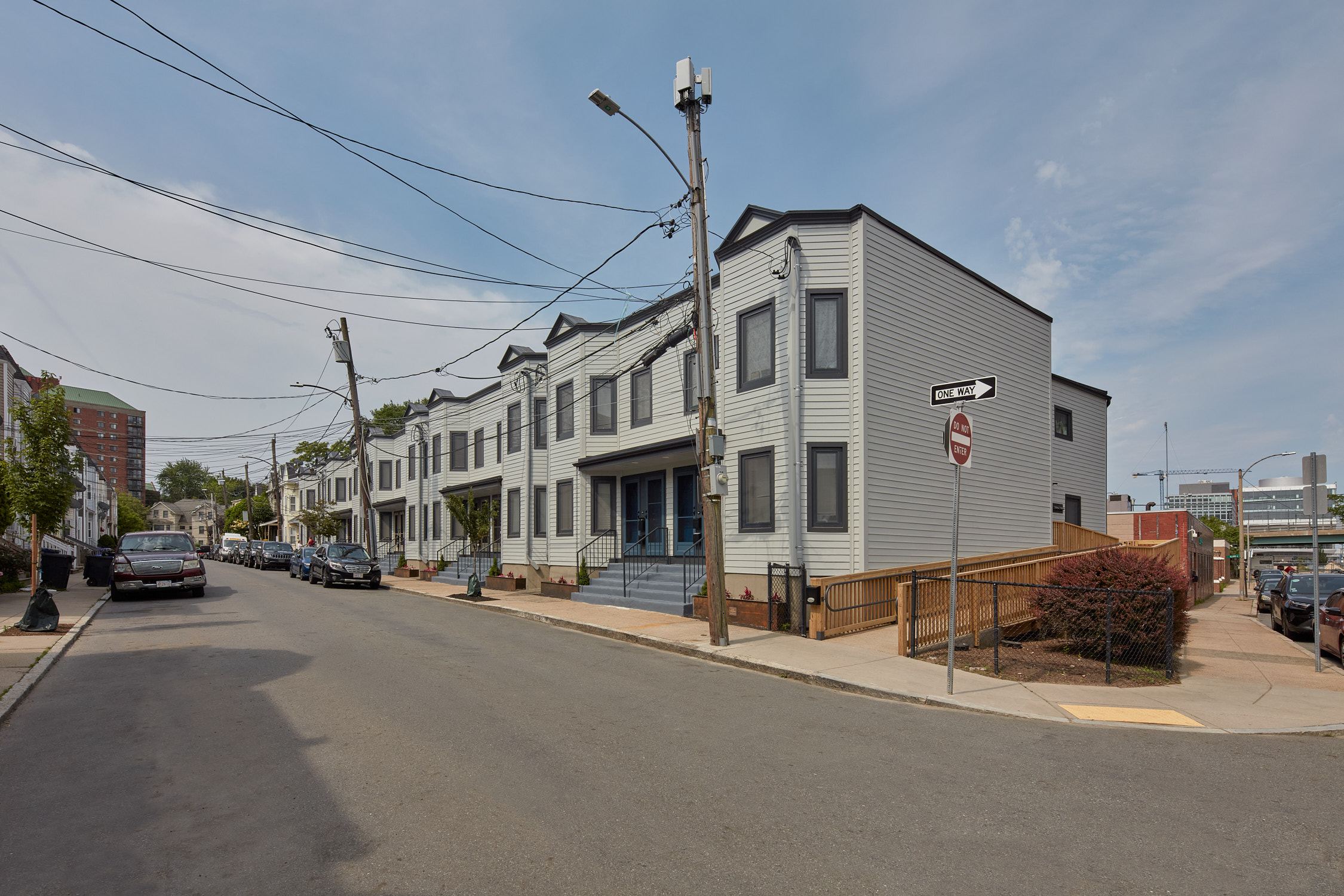
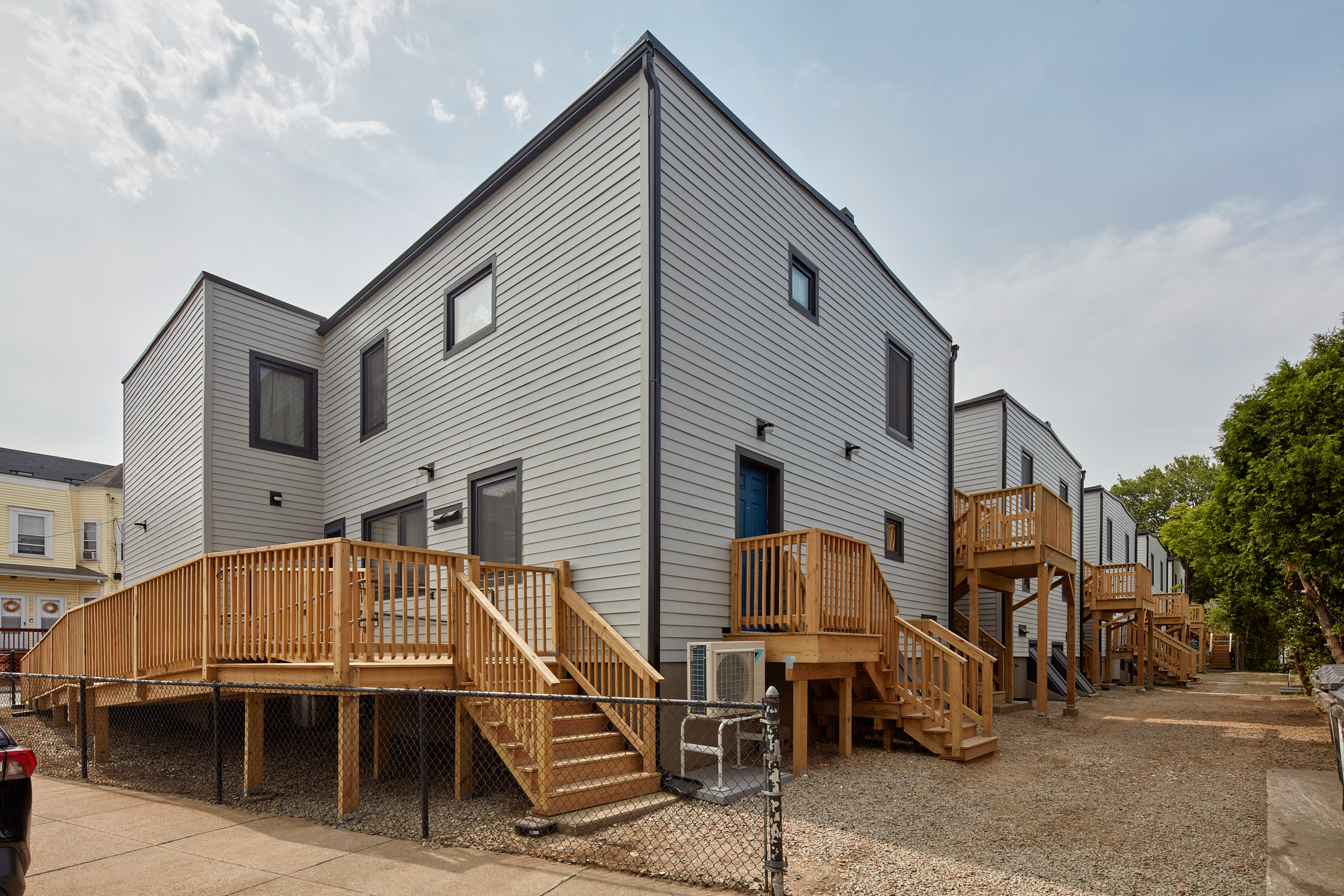
In May of 2025, Allston Brighton Community Development Corporation (ABCDC) completed a deep energy retrofit (DER) of Hano Homes, a 20-unit property on Hano Street in Boston’s Allston Brighton neighborhood. The project consisted of ten wood-frame rowhouses with brick party walls that were all built more than a century ago. Though construction lasted just 11 months, the pilot project involved years of planning and represents a potential model for performing DERs on affordable housing properties on an industrial scale.

Allston Brighton: An Introduction

Though distinct neighborhoods within Boston, Allston and Brighton are oftentimes considered a single entity (Allston Brighton) on account of their many similarities. They are both home to large student populations, with part of Boston University’s campus falling within Allston and part of Boston College’s campus falling within Brighton. Harvard Business School and many of the esteemed university’s athletic fields are also within Allston, as the university’s main campus sits directly across the Charles River in Cambridge. The connection to Cambridge is not solely due to proximity; Allston Brighton was actually part of the city (and known as “Little Cambridge”) until 1807. Allston Brighton was then absorbed by Boston in 1874 and then experienced several decades of rapid growth. By the end of the nineteenth century, the neighborhood had become a streetcar suburb similar to the adjacent cities of Brookline and Newton.

Despite the youthful energy of Allston Brighton’s residents, much of the housing stock in the area dates back to this time. The buildings are predominately small-scale residential and of varied typology. Within just a few blocks, one will find stately and detached single-family homes, low-rise multifamily buildings, and rowhouses. Some of these rowhouses were built for middle class families, while others were built as workforce housing.

Two trains at Packards Corner station, located at the intersection of Commonwealth and Brighton avenues. Photo credit: Pi.1415926535

Hano Homes are representative of the latter group. Built by book manufacturer and real estate developer Samuel Hano as housing for his workers in 1888, the cluster of ten rowhouses is home to 20 individual apartment units. Each of the homes contains a basement and two modest apartments, one two-bedroom and one three-bedroom, that average approximately 780 square feet in area.

Since being acquired by Allston Brighton Community Development Corporation (ABCDC) in the 1980s, the 20 units that make up Hano Homes have been affordable low-income housing. This is in keeping with the primary mission of ABCDC, which was founded in 1980 to promote affordability in Allston Brighton. The organization’s mission is to build a stronger, more stable community by providing housing opportunities to individuals and families of all incomes. They currently oversee a portfolio of more than 550 units across a dozen buildings within the Allston Brighton area.

Dutch Inspiration

According to ABCDC Director of Real Estate Development Caitlin Robillard, the idea of performing a deep energy retrofit (DER) on Hano Homes arose after a meeting with RMI (formerly known as the Rocky Mountain Institute) in 2021. As Robillard explains, RMI was looking for organizations interested in taking part in the 1,000 Apartment Challenge through their REALIZE-MA platform. Inspired by Energiesprong—a retrofit program first pioneered in the Netherlands starting in 2010 that has led to the deep energy retrofit of thousands of individual units throughout Europe and the United Kingdom—RMI’s ambitious program is designed to scale deep energy retrofits through the use of systems electrification and focusing on deep energy exterior retrofits.

Super-insulated exterior retrofit packages have been central to the success of the Energiesprong program, as has the use of prefabricated elements. Prefabrication lends itself to greater replicability, improving the speed with which retrofits can take place and bringing down the costs of materials and installation.

By establishing a high-volume retrofit platform that follows a similar model, RMI hopes to significantly increase demand for deep energy retrofits, while creating a more competitive marketplace for the components necessary to complete these projects and a workforce more familiar with high-performance building methodologies. Ultimately, the goal is to bring down costs to the point that retrofit projects can be financed entirely through utility cost savings.

Don't Go It Alone. Join Our Community.

The Reimagine Buildings Collective brings together building professionals stepping up to tackle climate change.

RMI recognized that additional financing would be necessary for early adopters in the United States. As of the early 2020s, they also recognized that states like Massachusetts and cities like Boston were positioning themselves to become climate leaders through stricter building codes, as well as a multitude of programs designed to provide homeowners and housing providers with the resources to meet those codes and perform DERs. For housing providers who were preparing to make serious capital improvements to a property, there was an abundance of figurative carrots if they were willing go the extra mile and commit to a DER.

ABCDC agreed that Hano Homes was due for an update, as renovations had not occurred since 2003. They were also very receptive to the idea of performing a DER, as it aligned with their ambitious goal of decarbonizing their entire portfolio by 2040. Furthermore, Robillard notes that creating healthier and more comfortable homes is in keeping with their mission to provide quality housing for their residents.

Prior to the DER, Hano Homes’ heating and domestic hot water systems were gas-fired. These utilities were paid by ABCDC. Electricity was also paid by ABCDC, but cooling systems (supplied by window air conditioning unit) had to be purchased by occupants.

Robillard, a lifelong resident of Massachusetts, notes that air conditioning was once a luxury, but that it has become increasingly necessary during summer heatwaves. By providing cooling, as well as making homes more resilient through passive design strategies, ABCDC can ensure residents are comfortable throughout the year and that tenants who are aging in place or struggling with chronic health conditions can safely shelter in place during power outages and emergencies.

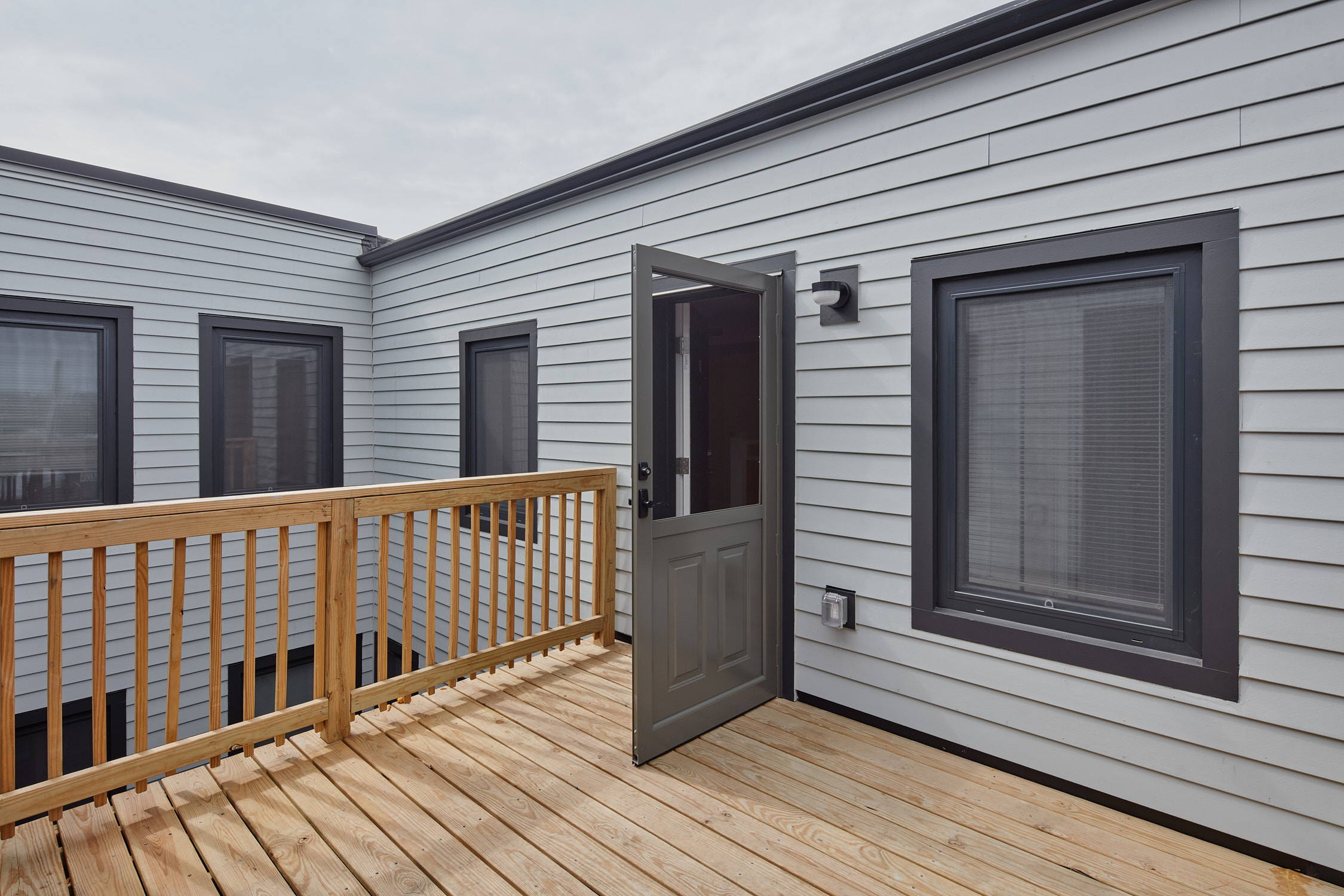
Hano Homes following the retrofit. Photo courtesy of Jane Messinger

Exploring Feasibility and Financing

ABCDC decided to explore the REALIZE-MA program more, so RMI introduced them to Onion Flats Architecture, an architecture firm that has worked in the Passive House space in both Philadelphia and Boston for approximately a decade. Onion Flats Architecture performed a feasibility study that showed that the DER was financially possible by upgrading the building envelope with a super-insulated exterior shell and integrating high-performance and all-electric systems.

RMI also connected ABCDC to Haycon, a design/build firm based in Boston that specializes in high-performance and Passive House buildings. ABCDC collaborated with the firm during preconstruction and later awarded them the contract to serve the project’s general contractor once they decided to go through with the DER.

messinger 061325 hanohomes 0o1a6950 1080x675

Project Team

Owners: Allston Brighton CDC

Architect: Onion Flats Architecture

General contractor: Haycon, Inc.

Phius verifier: Sustainable Comfort, Inc.

Photography: Jane Messinger

Even though the plan was technically feasible and ABCDC was a willing partner, it still took them several years to secure the financing to underwrite the project. In addition to receiving private funding through Eastern Bank and Liberty Mutual, Robillard cited a laundry list of programs that helped with funding or resources and included:

Additionally, the Massachusetts Housing Partnership provided a substantial mortgage at a reduced interest rate by committing to cut the ten rowhouses’ energy use intensity (EUI) by more than 50%. They also received a grant through Boston’s Equitable Emissions Investment Fund, a counterpart to the city’s Building Emissions Reductions Disclosure Ordinance (BERDO).

“It’s very exciting that there are so many public dollars going towards affordable housing and decarbonization,” says ABCDC Real Estate Development Project Manager Mara Tu.

One final source of funding to note came from the Massachusetts Gap Energy Grant Program, which is providing partial funding for the addition of photovoltaic (PV) arrays on the rooftops of the buildings. Additionally, they will receive federal solar tax credits through the soon-to-expire Residential Clean Energy Credit. Chris Straile, Director at Sustainable Comfort and the Passive House verifier on the project, adds that the PV array provides resilience in the event of a grid failure. However, he also notes that onsite renewables can provide insulation from wild fluctuations in electricity prices, as well, which makes them especially valuable given the spikes in utility prices that many Americans have recently experienced.

The 67.7 kW PV array is expected to supply 75% of the electricity for the 20 units, amounting to savings of $17,000 annually. Meanwhile, the reduction in EUI from the pre-retrofit baseline will also provide substantial savings. Prior to the retrofit, utility bills (including gas, electricity, water, and sewer) were approximately $85,000 per year. Following the retrofit but before the installation of the PV array, the utility bills (including only electricity, water, and sewer) have been in the ballpark of $60,000.

Though this runs the risk of being a gross oversimplification, the cut in operational costs is deep. It includes a $25,000 annual reduction in energy use plus $17,000 in electricity generated by the PV array, resulting in savings of $42,000 per year.

Avoiding Displacement

Sequencing is a balancing act during any retrofit, but the project team for Hano Homes had to essentially perform ten in a row while minimizing disruptions to the occupants living in the 20 units. As work was focused primarily on the exterior enclosure, occupants could remain in place during the majority of construction. In fact, each unit only had to be vacated for just two weeks so that workers could install the new mechanical systems, windows, and doors.

“It’s pretty remarkable what they were able to achieve in two weeks,” Robillard says.

As luck would have it, two units became vacant a few months before work started, so none of the families in the Hano Homes community ever had to leave the block when work was happening on their individual units. Rather than a potentially contentious game of musical chairs played out over 11 months, it was as if two extra seats were always on hand.

To further minimize the nuisance of being displaced, the team hired a consultant who specializes in relocating individuals during renovations. This is a requirement in Massachusetts due to regulations concerning affordable housing, but Robillard says that the consultant was extremely helpful. In addition to coordinating with occupants, they moved all the furniture and other belongings into storage before interior work began, and then they moved everything back to where it was once work was completed.

Figure 1. Moving inboard from the cladding, the wall assembly includes James Hardie siding, furring strips, wood fiber insulation, 7/16" ZIP sheathing panel, existing wood sheathing, and the existing 4x4 wooden stud framing with old fiberglass insulation. Illustration courtesy of RMI.

New Assemblies and Systems

According to Passive House Designer Kara Haggerty Wilson of Onion Flats Architecture, the R-value of the existing wall system was improved from R-16 to R-36.8. The team demolished back to the original sheathing and then installed 7/16” structural ZIP sheathing (water-resistive barrier and air barrier preinstalled) and a continuous, 5.5-inch layer of wood fiber insulation by Steico. The cladding system is Hardie® Plank lap siding (see Figure 1).

As the improvements to the enclosure were almost entirely on the exterior, no conditioned space was supplanted by additional insulation. However, improvements were made to the apartments themselves, including the addition of new appliances, fixtures, and finishes where appropriate. The existing ventilation systems, which were limited to kitchen and bathroom exhausts, were removed and replaced with new mechanical shafts that connected to the new and rightsized HVAC equipment.

Figure 2. The ducting is embedded in the wood fiber insulation on the building's exterior. Photo courtesy of Onion Flats Architecture.

The mechanical systems are housed in the basements of the rowhomes, which are inaccessible to occupants and sit outside of the Passive House envelope. These systems include a Daikin 2-ton non-ducted heat pump system (one per unit), 65-gallon heat pump water heater by Rheem (one per unit), and Panasonic 100 CFM ERV set to operate at between 70% and 80% efficiency (one per unit). The ductwork travels from ERV’s heat exchanger core in the basement up to the units, while the ductwork for the intake and exhaust have been embedded in the wood fiber insulation layer on the exterior (see Figure 2). Robillard notes that the strategy helped to reduce the amount of time needed in each unit, and that the team at Haycon felt that there wasn’t much of a learning curve when making the cutouts within the wood fiber insulation. They found the material extremely easy to work with.

Though the basement is not conditioned space, the exposed foundations have been equipped with 6 inches of EPS, resulting in an approximate R-value of 30. A spray-applied air barrier was then added to the ceiling to improve the airtightness separating the basement from the conditioned space above. Meanwhile, work on the roof was limited. Much of the existing roof system was left in place but 2 inches of polyiso was added to improve the R-value from R-55 to R-69, and a new EPDM (ethylene propylene diene terpolymer) membrane was installed to improve durability.

Haggerty Wilson notes that another strategy to reduce the amount of time spent working within the units involved a window buck solution. The window buck could be fully installed and sealed, allowing the exterior overclad to continue, even if work on the interior had not started. The triple-pane windows (by Amberline) could then be installed while working on the unit interior.

Minding the Gaps: Lessons Learned

From a very early date, the team had set their performance targets to align with Phius CORE 2021 standards. As they began to explore the real-world conditions within the building, however, they realized that the level of airtightness necessary to achieve certification was beyond the project’s scope. As Haggerty Wilson explains, there was an unexpected air leakage path in the foundation’s masonry that made achieving the airtightness score for Phius CORE 2021 (0.06 CFM50/ft2) or Phius REVIVE impossible without significantly more work than they had planned.

101 series(2)

These realities are part of the difficulties with retrofits. As Haggerty Wilson said during her November presentation about Hano Homes on PHA LIVE, “While we have smaller scale repetitive exterior elements, the buildings are 130 years old. They’re not truly identical. Everything is a little unique in some shape or form.”

As frustrating as they may be, getting caught up by these challenges can lead one to miss the forest for the trees. The airtightness score ended up being 0.26 CFM50/ft2, which is better than code. It also represents a 68% increase in airtightness from prior to the retrofit. Meanwhile, the EUI of Hano Homes prior to the DER was 59.1 kBtu/ft2·yr. The improvements to the enclosure and systems brought that figure down to 18.25 kBtu/ft2·yr (a reduction of 69.2%). Projected net energy use is expected to decline further once the PV array is operable, to an EUI of 4.89 kBtu/ft2·yr. That is an over 90% reduction.

In addition to thermal comfort and energy efficiency, the occupants have also reported that the buildings, which sit within close proximity to a commuter rail line and the Massachusetts Turnpike, are now extremely quiet. “It’s made such a difference in the quality of life for our residents,” Robillard says.

1920x1080 Image

In other words, the tenants are happier with conditions in the buildings, while the buildings themselves are more resilient, free of gas-burning systems, and consume less than 10% of the net energy than they once did. Moreover, many of the lessons that ABCDC learned during the work on Hano Homes are already being applied to another DER taking place at Brian J. Honan Apartments, a 50-unit complex around the corner on Everett Street.

As ABCDC’s Tu observes, one of the most important lessons they learned is that they need to get the entire team on the same page early on. It’s not just when teams are aiming for Passive House certification; it’s any renovation or rehabilitation. “It takes a lot of coordination because issues are bound to pop up,” she says.

Robillard agrees, noting that team cohesion contributes to flexibility, creativity, and the ability to pivot quickly, which are all necessary when performing a DER.

“To keep the momentum of deep energy retrofits going, someone like Cailtin or Mara at ABCDC need to take the leap,” Straile adds. “It does take a group or an organization to initiate this because there is a risk. It’s never been done before. But being flexible helps with replicability, and we need to do Hano Homes a million times on all the existing buildings out there.”


Published: December 12, 2025
Author: Jay Fox